
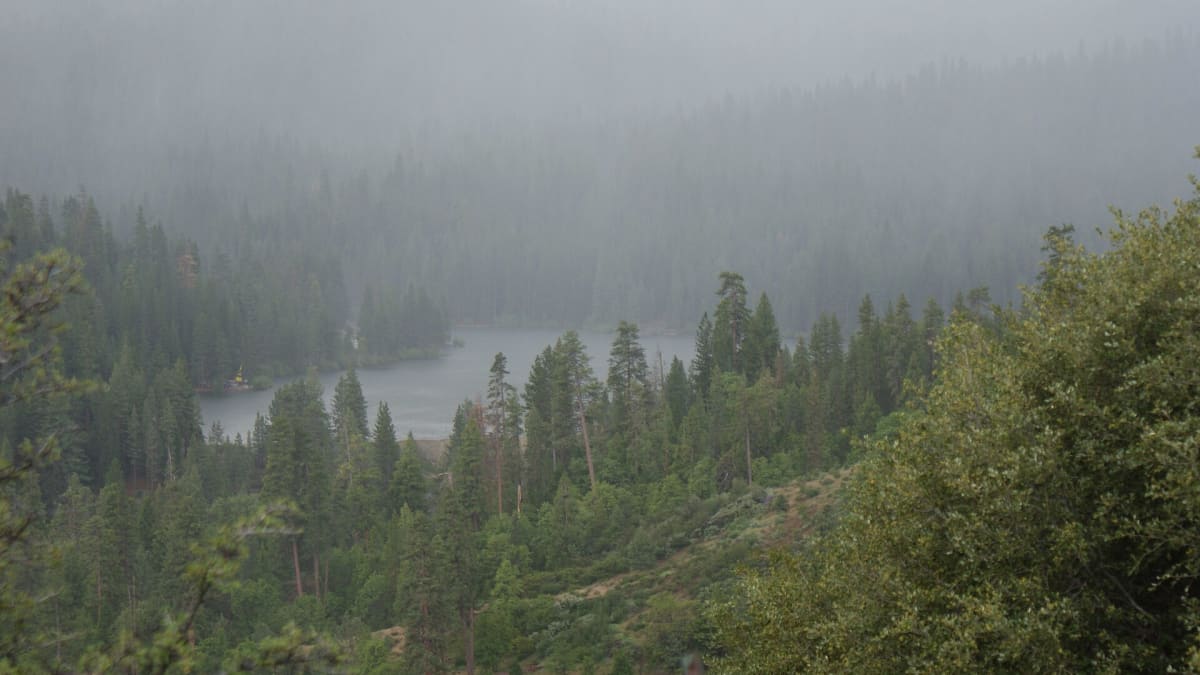
Kings Canyon National Park
Kings Canyon Visitor Center, Grant Grove, CA
Eastern Fresno County, Sierra Nevada
Kings Canyon is a park of extremes stacked on top of one another. Down low, the South Fork of the Kings River has carved a canyon so deep that from rim to river it drops farther than the Grand Canyon does, a raw plunge of granite walls, tumbling water, and green valley floor. Up high, the land climbs into the roof of the Sierra Nevada, a wild country of bare peaks, alpine lakes, and snowfields that hardly anyone reaches except on foot. And tucked in the middle, in cool forested groves, stand some of the largest living things on Earth: giant sequoias, including the great General Grant Tree.
This is a national park, established in 1940, when Congress folded in the much older General Grant National Park that had protected the big trees since 1890. It sits right next to Sequoia National Park and the two are run together as one operation, so a single trip usually takes in both. Most of Kings Canyon is roadless wilderness, which means the crowds thin out fast once you leave the pavement, and the quiet up in the high country is the kind you can almost hear.
Learn about Kings Canyon National Park
The Park
The heart of the park is the canyon it is named for. The South Fork of the Kings River spent millions of years cutting down through the granite, and glaciers later widened the gash into a broad U-shaped valley. Measured from the high ridges above down to the river, it is one of the deepest canyons in North America, deeper in raw relief than the Grand Canyon, though its walls are green and forested rather than bare and banded. The main road follows the river in along the canyon floor to a place called Cedar Grove, where the valley opens up and the walls tower thousands of feet overhead.
Higher up sits Grant Grove, a cool, shady stand of giant sequoias and the busiest part of the park. Its centerpiece is the General Grant Tree, the second-largest tree on Earth by volume and one of the oldest living things anywhere, wide enough at the base that a small crowd can stand around it and still not link hands. It has been nicknamed the Nation's Christmas Tree, a name that goes back to a Christmas gathering held at its foot long ago. Around it the Grant Grove trails wind among other giants, past a hollow fallen trunk you can walk right through.
Beyond the roads, the park becomes true wilderness. Most of Kings Canyon is high Sierra backcountry, a rugged sweep of granite domes, glacier-carved basins, and lakes above the tree line, crossed only by trail. This is the land the naturalist John Muir loved and fought to protect, country where you can walk for days and see more marmots than people. It is one of the wildest corners left in California, and the reason so much of the park has no road at all.
How to Enter
- Big Stump Entrance, off CA-180 coming east from Fresno, is the main way in and is open year-round. It leads straight to Grant Grove, the Kings Canyon Visitor Center, and the General Grant Tree.
- Cedar Grove access continues past Grant Grove on the CA-180 Kings Canyon Scenic Byway, which drops down into the canyon itself. This stretch is seasonal and closes in winter, generally reopening once the snow clears in late spring and staying open through fall.
- From Fresno and California's Central Valley, follow CA-180 east for about an hour and a half to reach the Big Stump Entrance. The park also connects to neighboring Sequoia National Park by the Generals Highway, so many visitors enter one park and drive through to the other on a single trip.
Things to Do
- The General Grant Tree is the must-see, reached by a short paved loop through Grant Grove. It is the second-largest tree on Earth, the Nation's Christmas Tree, and the trail passes other giants and a walk-through fallen log along the way.
- Grant Grove itself is worth lingering in, with easy forest trails among the big sequoias and, a short drive away, the Panoramic Point overlook that opens up across the high Sierra.
- Cedar Grove, at the bottom of the canyon, is the launch point for the wild backcountry. The drive in along the Kings River is a highlight all on its own, with pullouts above the rushing water.
- Zumwalt Meadow is a gentle loop along the canyon floor, a green meadow ringed by granite walls with the river running alongside, one of the prettiest easy walks in the park.
- Roaring River Falls is a quick, mostly paved walk to a powerful chute of whitewater squeezing through a granite slot, loudest in late spring when the snowmelt is high.
- The high country wilderness is for those with the time and gear to hike or backpack. Trails climb from Cedar Grove toward alpine lakes and passes, some linking to the famous John Muir and Pacific Crest trails.
History
Long before it was a park, this country was home to the Western Mono, also known as the Monache, along with other Sierra peoples. They lived in and traveled through these forests and canyons for countless generations, gathering acorns from the oaks, moving up to the high meadows in the warm months, and crossing the mountains to trade with tribes on the eastern side of the range. The giant sequoias and the deep canyon were part of a landscape they knew intimately and cared for with fire and long use, and their descendants remain connected to this land today.
Newcomers reached the big trees in the 1800s, and word of the enormous sequoias spread quickly. The General Grant Tree and its neighbors were protected early, in 1890, when Congress set aside a small General Grant National Park just for the grove, the same year Sequoia and Yosemite were established. The naturalist John Muir explored the Kings River country in these years and wrote about the deep canyon with the same wonder he brought to Yosemite, arguing that it too deserved protection.
It took another half century for that larger vision to come true. In 1940 Congress created Kings Canyon National Park, wrapping the old General Grant park and a vast stretch of high Sierra wilderness into one much bigger preserve. The canyon and its river were saved from dam projects that would have flooded the valley floor, a fight conservationists waged for years. Since 1943 Kings Canyon and Sequoia have been managed together as a single unit, sharing staff, roads, and a headquarters.
In the decades that followed, the Civilian Conservation Corps and the Park Service built much of what visitors use today, from trails through Grant Grove to the road down into Cedar Grove. The backcountry, though, was left deliberately wild. Most of the park remains roadless to this day, which was the whole point: to keep a piece of the high Sierra as it has always been, reachable only on foot or by mule.
Little-Known Facts
- Measured from the high ridges down to the river, Kings Canyon is one of the deepest canyons in North America, deeper in raw relief than the Grand Canyon, though its granite walls are green with forest rather than bare rock.
- The General Grant Tree is the second-largest tree on Earth by volume, and it carries two official titles: the Nation's Christmas Tree, named in the 1920s, and a National Shrine honoring those who died in war.
- The park was born in two pieces. General Grant National Park protected just the sequoia grove starting in 1890, and it was folded into the much larger Kings Canyon National Park when that was created in 1940.
- Nearly all of Kings Canyon is designated wilderness with no roads at all. The pavement reaches only the edges, so most of the park can be seen only by hiking or backpacking.
- The naturalist John Muir loved this country and compared the Kings River canyon to a rival of Yosemite, championing it decades before it finally became a park.
- The canyon was nearly drowned. Plans to dam the Kings River and flood the valley floor were fought off by conservationists, one of the reasons the free-flowing river still runs through Cedar Grove today.
- Kings Canyon and Sequoia are run as one park. A single team manages both, so your entrance covers both parks and you can drive between them on the Generals Highway.
- The high country reaches deep into the roof of the Sierra Nevada, a land of granite peaks and alpine lakes crossed by the legendary John Muir and Pacific Crest trails.
Plan Your Visit
- An entrance fee applies (per vehicle, good for seven days) and it covers both Kings Canyon and neighboring Sequoia National Park. Interagency annual passes are accepted; check the park website for the current rate.
- Grant Grove and the Big Stump Entrance are open year-round, but the Kings Canyon Scenic Byway down to Cedar Grove closes in winter and reopens once the snow clears, usually in late spring.
- Cedar Grove is remote, about an hour of winding driving below Grant Grove with no services in between. Fuel up and stock water and food before you head down, because gas and supplies are limited inside the park.
- Black bears live throughout the park. Store all food and scented items in the bear-proof lockers or your vehicle's bear box, never in a tent or left out at a picnic site, both for your safety and the bears'.
- Much of the park is high country. Take it easy at altitude, carry plenty of water, and remember that mountain weather can turn cold and stormy even in summer.
Inside the Park
General Grant Tree
One of the largest sequoias on earth, the Nation Christmas Tree, in Grant Grove.
Kings Canyon Scenic Byway
A dramatic drive from the sequoia groves down into one of the deepest canyons in America.
Zumwalt Meadow
A lush canyon-floor meadow ringed by mile-high granite walls, circled by an easy loop.
Roaring River Falls
A powerful granite-chute waterfall reached by a very short paved path off the byway.
Details
Eastern Fresno County, Sierra Nevada
Frequently asked questions
Is there an entrance fee for Kings Canyon?
Yes. Kings Canyon charges a per-vehicle entrance fee that is good for seven days, and the same fee also covers neighboring Sequoia National Park since the two are managed together. Interagency annual passes are accepted. Check the National Park Service website for the current rate before you go.
How is Kings Canyon connected to Sequoia National Park?
Kings Canyon and Sequoia sit side by side and are run as a single operation, sharing staff, a headquarters, and one entrance fee. The Generals Highway links the two, so most visitors see both on the same trip. If you are planning a visit, it is easiest to think of them as one large park with two names.
When is Kings Canyon open, and is the road to Cedar Grove always accessible?
Grant Grove and the Big Stump Entrance are open year-round. The Kings Canyon Scenic Byway (Highway 180) that drops down into the canyon to Cedar Grove is seasonal, though, and closes for the winter. It usually reopens once crews clear the snow in late spring and stays open through fall, so plan a canyon trip for the warmer months.
Do I need a reservation or timed entry?
Reservations or timed-entry rules may apply during the busiest seasons or for certain activities and backcountry trips, and these can change from year to year. Check the park website close to your visit for the current requirements. For day visits to Grant Grove, you can usually just drive in through the Big Stump Entrance.
How much time do you need at Kings Canyon?
You can see Grant Grove and the General Grant Tree in a half day. To also drive the Scenic Byway down to Cedar Grove, walk Zumwalt Meadow, and take in Roaring River Falls, give it a full day, since the drive in and out of the canyon takes a couple of hours by itself. Backpackers heading into the wilderness plan for several days.
What is the best time of year to visit?
Late spring through early fall is the reliable window, when the Cedar Grove road is open, the waterfalls are running strong from snowmelt, and the high country trails are clear. Summer is warm and busy in the groves but still cool up high. Winter is quiet and beautiful in Grant Grove under snow, but the canyon road is closed.
What is the must-see if I only have a short time?
The General Grant Tree. A short paved loop through Grant Grove brings you to the second-largest tree on Earth, the Nation's Christmas Tree, and passes other giant sequoias and a walk-through fallen log along the way. If you have longer, the drive down the Scenic Byway into the canyon is the other unforgettable experience.
Are there black bears, and how do I store food?
Yes, black bears live throughout the park and are drawn to any food or scented item. Store all food, drinks, coolers, and toiletries in the bear-proof lockers provided or in your vehicle, and never leave them in a tent or out on a picnic table. Keeping food secured protects you and keeps the bears wild and safe.
Are pets allowed in the park?
Pets are allowed in developed areas, campgrounds, parking lots, and along paved roads, but not on most trails, in the sequoia groves, or in the backcountry. Keep them leashed, bring water, and never leave a pet in a vehicle. Check the park website for the current pet rules before you go.
Where can I stay or camp inside the park versus nearby?
There is seasonal lodging and there are campgrounds inside the park at both Grant Grove and Cedar Grove, though the Cedar Grove options run only while the canyon road is open. Space fills up in summer, so book ahead. Beyond the boundary, the towns along Highway 180 out toward Fresno offer more rooms and supplies, and it is worth fueling up there before the drive in.