
Huntington Beach State Park
Jetty Dr, Murrells Inlet, SC
Murrells Inlet, SC
One of the best birding spots on the East Coast, where a wide undeveloped beach meets salt marsh, alligator ponds, and a seaside castle built by artists.
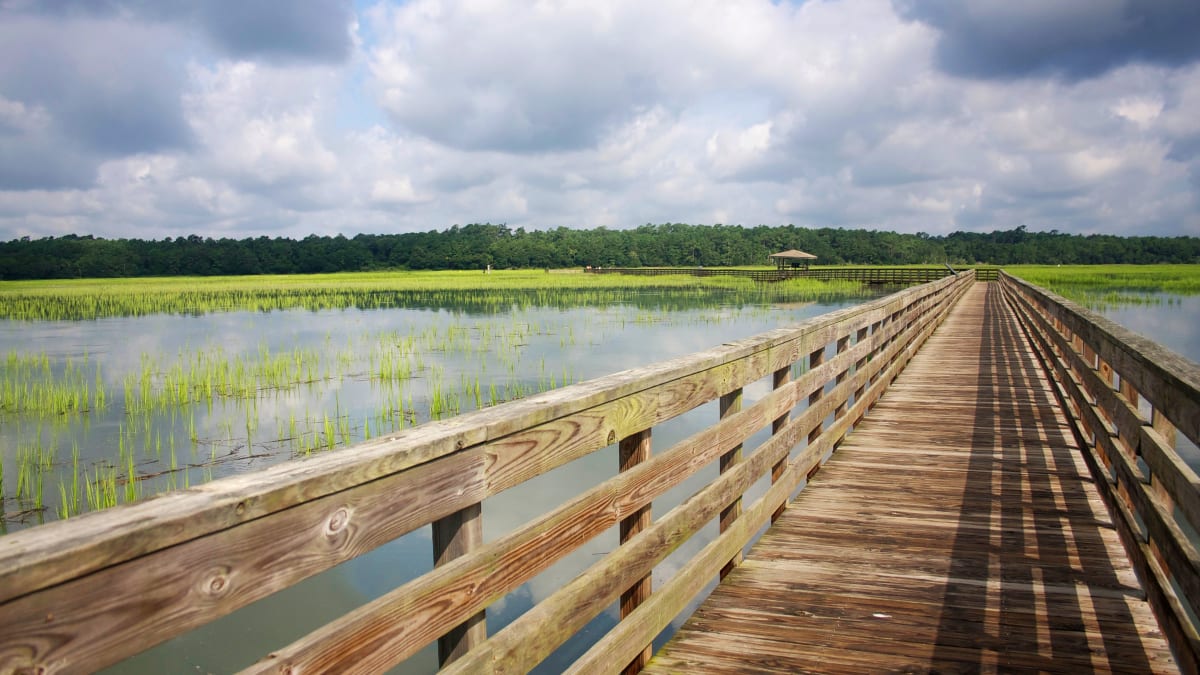
Huntington Beach State Park is the quieter, wilder side of the Grand Strand, a stretch of the South Carolina coast better known for the crowds and boardwalks of Myrtle Beach. Here the beach runs wide and undeveloped, backed not by high-rises but by salt marsh, tidal lagoons, and maritime forest, which together make it one of the finest wildlife-watching spots on the whole Atlantic coast.
The park shares its origins with the world-famous sculpture garden across the road. In the 1930s the sculptor Anna Hyatt Huntington and her husband, the scholar and philanthropist Archer Huntington, bought thousands of acres of old rice-coast land here. On one side they created Brookgreen Gardens, and on the other they built a winter home, a low, sun-washed castle called Atalaya, whose grounds are now this state park.
What Travelers Love
- A long, wild, undeveloped beach that feels a world away from the busy Strand
- Some of the best birding on the East Coast over the salt marsh and lagoons
- Alligators sunning along the causeway between the freshwater lagoon and marsh
- Touring Atalaya, the Moorish-style seaside castle at the heart of the park
Worth Knowing
- The causeway is a prime spot for birds and alligators; view wildlife from a safe distance
- Bring binoculars; the birding here is a big part of the draw
- Never approach or feed the alligators, which are wild and can be dangerous
- Atalaya is open for self-guided touring and hosts an annual arts festival
Learn about Huntington Beach State Park
Atalaya, a castle by the sea
The centerpiece of the park is Atalaya, the winter home the Huntingtons built in the early 1930s. The name means watchtower in Spanish, and the house was modeled on the Moorish architecture of the Spanish coast, a low square of rooms wrapped around an open inner courtyard, with a tower rising over it. It was built by local workers during the Great Depression, giving welcome employment in hard times.
Anna Hyatt Huntington was one of the most celebrated sculptors of her era, and Atalaya was as much a studio as a home. The house included stables and animal pens so she could work from live models, and an open-air studio for her large bronzes. Today the house stands empty and evocative, open for self-guided walks through its shadowed rooms and courtyard, and each fall it hosts a well-loved arts and crafts festival.
A birder's paradise
Huntington Beach is famous among birders, and for good reason. The park packs an unusual range of habitats into a small space: open ocean, sandy beach and dunes, salt marsh, a large freshwater lagoon, and maritime forest, each drawing its own birds. The causeway that crosses between the freshwater lagoon and the salt marsh is one of the single best birding spots in the state.
Over the course of a year hundreds of species pass through. Wading herons and egrets stalk the shallows, shorebirds probe the sand, wintering ducks raft on the lagoon, and ospreys, eagles, and painted buntings turn up in season. Because the water and marsh are right beside the road, even a short visit with binoculars can be remarkable.
Alligators, the marsh, and the beach
The freshwater lagoon and its causeway are also the best place along the coast to see American alligators, which sun themselves on the banks and drift in the still water. They are wild, powerful animals, and the rule is simple: watch from a distance, never feed or approach them, and keep pets close. The mix of fresh and salt water side by side is what makes the wildlife here so rich.
The beach itself is broad and clean, backed by low dunes and sea oats rather than buildings. It is a fine place to swim, walk, fish, and hunt for shells and shark teeth, and because it is protected, it also serves as a nesting beach for sea turtles in summer. The contrast with the developed Strand just up the coast is part of what makes the park feel like a discovery.
Season by season
Spring brings warm days, wildflowers in the dunes, and a rush of migrating songbirds and shorebirds, making it a top season for birders.
Summer is beach weather, hot and busy, with the ocean warm for swimming and sea turtles nesting on the dark, quiet stretches at night. Fall is a favorite of many regulars, with cooler air, fewer crowds, and another wave of migration, and it is when the Atalaya arts festival takes place. Winter is mild, quiet, and excellent for waterfowl and eagles over the lagoon, the beach nearly empty under a wide sky.
Closest Boutels
The closest Boutel™ stays, so you can turn this stop into an overnight. Each is a place we chose through independent editorial review, never a paid placement.
Details
Murrells Inlet, SC
Frequently asked questions
What is Huntington Beach State Park?
Huntington Beach State Park, near Murrells Inlet on the South Carolina coast, is a beautiful and beloved coastal park offering a pristine beach, rich wildlife, and a striking historic castle. The park protects a lovely stretch of Atlantic shoreline along with salt marshes, a freshwater lagoon, and maritime forest that make it one of the best birdwatching spots in the state, home to alligators, herons, and countless birds. Its centerpiece is Atalaya, a unique Moorish-style former winter home built in the early twentieth century. With its beach, wildlife, and historic castle, Huntington Beach State Park offers a spectacular destination in South Carolina.
What can you do at Huntington Beach State Park?
You can relax and swim at the pristine beach, walk the boardwalks and trails through salt marsh and maritime forest, watch for abundant birds, alligators, and wildlife, tour the historic Atalaya castle, camp, fish, and enjoy the beautiful coastal scenery. The beach, the exceptional birdwatching, and the unique Atalaya castle are highlights, offering a rare blend of shore, wildlife, and history. It is a favorite for nature lovers and families. With its beach, wildlife, trails, and historic castle, Huntington Beach State Park offers a rewarding experience near Murrells Inlet, South Carolina.
What safety tips apply at Huntington Beach State Park?
When swimming in the Atlantic, watch for currents and any rip currents, heed lifeguard guidance and flags where present, and supervise children closely. The park is home to alligators in its lagoons and marshes, so keep a safe distance, never approach or feed them, and watch children and pets near the water. Bring sun protection and insect repellent for the marshes. Being cautious in the ocean, respecting the alligators, and supervising children ensure a safe visit to Huntington Beach State Park in South Carolina.
When is the best time to visit Huntington Beach State Park?
Spring and fall are especially rewarding for the outstanding birdwatching during migration and for pleasant weather, while summer is popular for the beach though hot and humid, and winter is mild and good for birding. The park offers something in every season, with the beach best in the warm months and wildlife viewing strong in the cooler ones. Bring binoculars for the birds. For the best birding and pleasant weather aim for spring or fall, and for beach time, summer, at Huntington Beach State Park near Murrells Inlet, South Carolina.
What is near Huntington Beach State Park?
Huntington Beach State Park is near Murrells Inlet on the South Carolina coast, directly across from Brookgreen Gardens, within reach of Myrtle Beach with the SkyWheel and Family Kingdom, Georgetown and Hobcaw Barony, and the Grand Strand beaches. That makes Huntington Beach State Park a spectacular stop to combine with Brookgreen Gardens, the Myrtle Beach attractions, and the other sights of the Grand Strand on a visit to South Carolina.
Outside the Park

Brookgreen Gardens
1.8 miles away
Many visitors race past on Highway 17 without knowing the first public sculpture garden in America sits right here.

Hobcaw Barony
15 miles away
Hidden across the bay from busy Georgetown is a 16,000-acre wild estate most travelers never learn about.
Family Kingdom Amusement Park
15 miles away
A classic beachfront amusement park kids can walk to from the sand.
The Rice Museum
16 miles away
People come to Georgetown for the waterfront and miss the small museum that explains why the town exists at all.

SkyWheel Myrtle Beach
20 miles away
An easy crowd-pleaser right on the boardwalk. The SkyWheel lifts you 187 feet over the beach in an enclosed, air-conditioned gondola, so it works for nervous riders and stays comfortable on a hot day....