
Green Lakes State Park
8219 Green Lakes Park Terrace, Fayetteville, NY
Fayetteville, NY
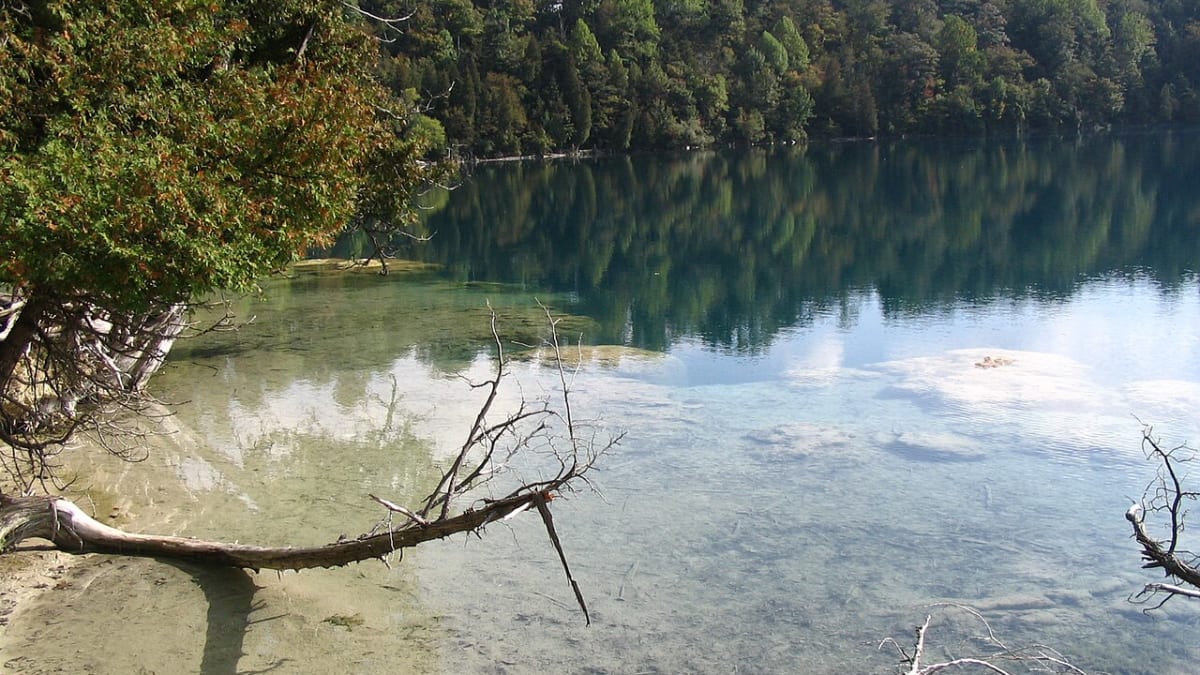
Two deep glacial lakes that hold an astonishing blue-green color, layered so still that their bottom waters have not mixed for thousands of years.
Green Lakes State Park protects two small, extraordinarily colored lakes east of Syracuse, Green Lake and Round Lake, whose water holds a deep, glowing blue-green that looks almost unreal against the surrounding forest. The lakes fill steep-sided basins gouged out by glacial meltwater at the end of the last Ice Age, and they are startlingly deep for their size.
What makes them scientifically famous is that they are meromictic, meaning their upper and lower waters do not mix. In most lakes the water turns over each year, but here the deep layer has sat undisturbed for thousands of years. Round Lake and the old-growth forest around it are recognized as a national natural landmark, and a shaded trail circles each lake beneath the tall trees.
What Travelers Love
- The vivid, almost tropical blue-green color of the two lakes
- A shaded loop trail that circles each lake beneath tall old-growth trees
- A swimming beach on Green Lake in the warm months
- The rare science of a meromictic lake whose layers never mix
Worth Knowing
- It is a popular park close to Syracuse, so arrive early on hot summer weekends
- Swimming is allowed only at the designated beach and only when it is staffed
- The lakeshore trails are easy and shaded; wear good walking shoes for the tree-root sections
- This is a protected old-growth forest and fragile lake, so stay on trails and keep the water clean
Learn about Green Lakes State Park
How the lakes were made
The two lakes were carved at the close of the last Ice Age, roughly ten to fifteen thousand years ago, as the great continental glaciers melted back across central New York. Torrents of meltwater plunging off the ice drilled deep, narrow basins into the ground, called plunge pools, and when the ice was gone these basins filled with water.
Because they are so deep in proportion to their surface, and sheltered by steep banks and forest, the lakes have very little wind-driven mixing. This land lies within the homeland of the Onondaga, keepers of the central council fire of the Haudenosaunee Confederacy, whose nation continues nearby to this day. To them and their ancestors this was long a known and traveled country.
The mystery of the color
The lakes owe their striking blue-green to being meromictic, a rare condition in which the water settles into permanent layers that never turn over. Ordinary lakes mix top to bottom each spring and fall, but here the dense, mineral-rich bottom water stays sealed below the lighter surface water year after year.
In the deep, oxygen-free bottom layer, minerals and fine particles behave differently than they would in a well-mixed lake, and calcium carbonate stays suspended in the sunlit upper water in a way that scatters light toward the blue-green end of the spectrum. The result is that vivid, almost turquoise cast. Because the bottom water is undisturbed, sediments settle in fine annual layers that scientists can read like tree rings, making these lakes a valuable record of the region's past climate.
The old-growth forest
Ringing Round Lake is a stand of old-growth forest, a rare survivor in a region where nearly all the original woods were cleared long ago. Tall tulip trees, hemlocks, sugar maples, and oaks rise here, some of them centuries old, over a floor of ferns and wildflowers. The forest and the lake together are protected as a national natural landmark.
Walking the loop trail around Round Lake, you pass beneath a canopy that feels far older and quieter than the young woods most eastern parks offer. Spring brings a carpet of wildflowers, songbirds fill the trees, and the still water mirrors the forest. It is a reminder of what the region's woodlands looked like before the axe, preserved in a small pocket beside the water.
Trails, beach, and seasons
Easy shaded trails circle both lakes, and longer paths climb into the surrounding hills and meadows, giving hikers, runners, and families a mix of level lakeshore walking and gentle upland routes. In the warm months a beach on Green Lake opens for swimming, one of the most popular summer spots near Syracuse, and the still lakes draw quiet paddlers.
Spring and fall are especially fine here, with wildflowers and birdsong in spring and brilliant maple color reflected in the lakes in autumn. Winter turns the loop into a snowshoe and cross-country ski route through the silent old forest. In every season the color of the water is the thing people remember, glowing blue-green in a bowl of trees.
Closest Boutels
The closest Boutel™ stays, so you can turn this stop into an overnight. Each is a place we chose through independent editorial review, never a paid placement.
Details
Fayetteville, NY
Frequently asked questions
Why is the water at Green Lakes so blue-green?
Green Lakes State Park, near Syracuse, holds two rare meromictic lakes, meaning their surface and deep waters never seasonally mix, one of fewer than a hundred such lakes in the world. This unusual chemistry keeps fine calcium carbonate suspended in the water, which scatters light to produce the lakes' striking turquoise and emerald color. The effect is most vivid on a sunny day, when the sunlight really lights up the blue-green hues.
Can you swim at Green Lakes State Park?
Yes, there is a designated swimming area on Green Lake with lifeguards on duty during the summer season, roughly Memorial Day through Labor Day. The beach gets crowded on warm weekends, so arriving before mid-morning helps you get a good spot and parking. Swim only in the guarded designated area, and be aware that swimming can occasionally be closed on short notice for water quality or staffing reasons.
What are the hiking trails like at Green Lakes?
The trails are gentle and scenic. The most popular is the loop around Green Lake, about two miles with almost continuous views of the glowing water, taking under an hour at an easy pace. You can extend it to roughly three and a half miles by adding the loop around neighboring Round Lake, passing through a stretch of old-growth forest. The flat, well-kept paths make it welcoming for families and casual walkers.
When is the best time to visit Green Lakes State Park?
Summer is prime for swimming and the warm, sunny days that make the lake color most brilliant, though it is also the busiest, so come early for parking. Fall is spectacular, with autumn foliage framing the blue-green water. The park is open year-round and lovely in every season. Whenever you go, a clear, sunny day shows off the famous colors far better than an overcast one.
What should I know before visiting Green Lakes?
Arrive early on summer weekends, since both parking and the beach fill up. Bring binoculars, as the unusual lake conditions and surrounding forest make for good birdwatching. Stay on the trails and out of undesignated swim areas to protect both yourself and this fragile, rare ecosystem. There is a vehicle entry fee in season, and camping and cabins are available if you want to stay overnight, so book ahead for summer.
Outside the Park

Erie Canal Museum
8.9 miles away
Most travelers zip past Syracuse on the Thruway with no idea the Erie Canal once ran through the middle of it.
Fort Stanwix National Monument
28 miles away
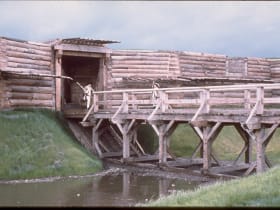
It surprises people to find a full-size log fort planted in the heart of downtown Rome.

Munson Museum of Art
37 miles away
Utica gets overlooked, and so does this museum, which is a shame.