
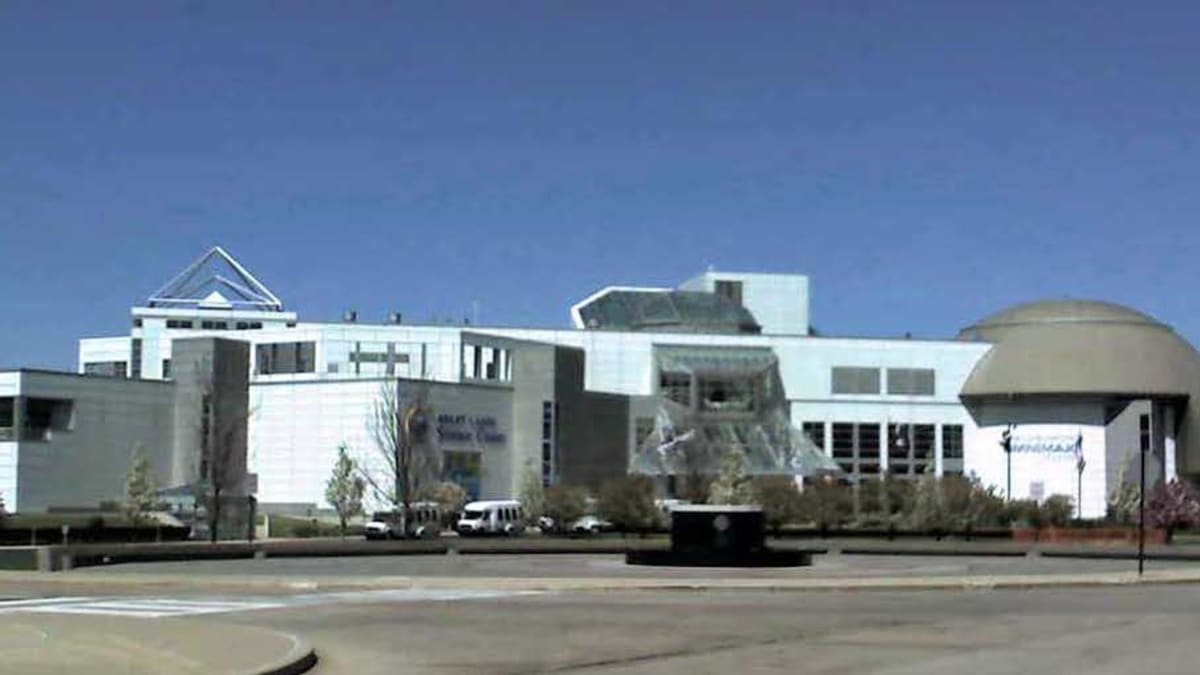
Great Lakes Science Center
601 Erieside Ave, Cleveland, OH
Cleveland, OH
A lakefront museum where you can steer a virtual sailboat across Lake Erie, feel a tornado spin at arm's length, and stand beside a spacecraft that flew in orbit.
The Great Lakes Science Center opened on Cleveland's lakefront in 1996 and quickly became the region's flagship museum of science and industry. Inside its glass-and-steel building are hundreds of interactive exhibits spread across several floors, a domed theater, and a working demonstration space where staff run live science shows on everything from electricity to combustion.
What sets this science center apart is its deep tie to NASA. The museum is home to the NASA Glenn Visitor Center, which grew out of the space agency's nearby Glenn Research Center, one of the birthplaces of American rocket and aircraft engineering. Here you can stand beside a spacecraft that actually flew in orbit and trace Ohio's outsized role in the story of flight and space.
What Travelers Love
- Hundreds of hands-on exhibits that reward curious kids and curious adults alike
- The NASA Glenn Visitor Center, with a real Apollo command module and space artifacts
- The big domed theater and its immersive science and nature films
- The lakefront setting, with Lake Erie and the downtown skyline right outside
Worth Knowing
- It is a busy spot on rainy days and school breaks, so weekday mornings are calmest
- Plan for a good chunk of a day if you want to see the exhibits and a dome film
- Parking is available in the adjacent lakefront garages, which fill on big event days
- The building is fully indoor and climate controlled, a strong choice in any weather
Learn about Great Lakes Science Center
A museum built on the lakefront
Cleveland made its name in the industrial age as a city of steel, oil, and machines, and the Great Lakes Science Center was conceived to celebrate and explain that legacy of science and industry. When it opened in the mid-1990s it anchored a stretch of reclaimed lakefront alongside the new Rock and Roll Hall of Fame, part of a broad effort to turn the city's waterfront back toward the public.
The building itself is part of the exhibit, with big windows framing Lake Erie and a design meant to draw visitors toward the water. Over the years the center has grown, absorbing the NASA Glenn Visitor Center and adding a moored Great Lakes freighter, the William G. Mather, as a floating museum ship at the dock nearby.
Ohio, NASA, and the road to space
Ohio has an almost unmatched claim on the history of flight. The Wright brothers built their first airplanes in Dayton, John Glenn of Ohio became the first American to orbit the Earth, and Neil Armstrong, born in the small town of Wapakoneta, was the first person to walk on the Moon. The NASA Glenn Research Center, on the edge of Cleveland, has spent generations solving the hard problems of jet engines, rockets, and life in space.
The science center's NASA Glenn Visitor Center brings that story indoors. Its centerpiece is a genuine Apollo command module, the cone-shaped capsule that carried astronauts home from space, along with spacesuits, moon-mission artifacts, and displays on the research still happening just across town. For young visitors dreaming of space, standing beside a craft that truly flew is a quiet, powerful moment.
Hands-on science, floor by floor
The heart of the museum is its exhibit floors, where nearly everything invites touching, turning, and testing. Visitors can steer a virtual boat, generate their own electricity, watch a small tornado of mist spin in a tall column, and puzzle through exhibits on physics, biology, and the health of the Great Lakes themselves.
Live demonstrations run throughout the day in a dedicated science stage, where staff set things alight, freeze them, or launch them to show a principle in action. A domed theater wraps films across a curved ceiling, putting audiences inside deep space, the ocean floor, or the inner workings of the human body. It is the kind of place where a single afternoon can spark a lifelong interest.
The lakefront and the wider waterfront
The science center is one piece of a revived Cleveland lakefront that has become a genuine destination. Just outside stands the steamship William G. Mather, a retired Great Lakes bulk freighter now open as a museum ship, where you can walk the deck and engine room of a vessel that once hauled iron ore and coal across the inland seas.
Next door rises the Rock and Roll Hall of Fame, and the harbor, ballfields, and downtown skyline complete the scene. Lake Erie changes constantly here, calm and glassy one morning, wind-whipped and gray the next, and the water is never far from view. It makes the science center as much about place as about exhibits, a museum rooted in the Great Lakes it explains.
Closest Boutels
The closest Boutel™ stays, so you can turn this stop into an overnight. Each is a place we chose through independent editorial review, never a paid placement.
The Roscoe Boutique Motel
Honorable Mention421 S Whitewoman St, Coshocton, OH
86 miles away|Learn More ›
Details
Cleveland, OH
Frequently asked questions
What is the Great Lakes Science Center?
The Great Lakes Science Center, on the Lake Erie waterfront in Cleveland, Ohio, is a large and engaging interactive science museum, a favorite family destination filled with hands-on exhibits, a giant-screen theater, and a historic ship. The center offers hundreds of interactive science exhibits across many fields, a domed giant-screen theater, exhibits on the Great Lakes and the environment, and the NASA Glenn Visitor Center with space artifacts, while a historic steamship, the William G. Mather, is docked outside as a floating museum. Its hands-on approach makes science come alive. A fascinating and family-friendly science center, it delights visitors. With its exhibits, the Great Lakes Science Center offers a compelling destination in Ohio.
What can you see at the Great Lakes Science Center?
You can explore hundreds of hands-on science exhibits, watch films in the giant-screen dome theater, see space artifacts at the NASA Glenn Visitor Center, learn about the Great Lakes and the environment, and tour the historic steamship docked outside. The interactive exhibits, the dome theater, the NASA space displays, and the historic ship are the draws, making it an engaging and educational visit for all ages. Its hands-on approach and the ship especially delight children. With its exhibits, the Great Lakes Science Center offers a rewarding visit in Cleveland, Ohio.
Is the Great Lakes Science Center good for families?
Yes, the Great Lakes Science Center is wonderful for families, with hundreds of hands-on exhibits, a giant-screen theater, space artifacts, and a historic ship that engage and delight children and adults alike. The interactive, playful approach makes science fun for young visitors, and its indoor setting is comfortable in any weather. It is one of the region's top family destinations. Its family appeal makes the Great Lakes Science Center a delightful destination in Ohio.
When is the best time to visit the Great Lakes Science Center?
As a mostly indoor science center, the Great Lakes Science Center is enjoyable year-round in any weather, making it a great stop in any season, with the warm months especially good for also touring the historic ship docked outside. Because hours and the ship's access can vary by season, checking current information before you go is wise. Because it is largely indoors, the Great Lakes Science Center makes a rewarding stop any time of year in Cleveland, Ohio.
What is near the Great Lakes Science Center?
The Great Lakes Science Center is on the Lake Erie waterfront in Cleveland, Ohio, within reach of the Rock and Roll Hall of Fame next door, downtown Cleveland, the Cleveland Museum of Art, and the other attractions of the Cleveland area. That makes the Great Lakes Science Center a compelling stop to combine with the Rock and Roll Hall of Fame and the other attractions of Cleveland on a visit to Ohio.
Nearby

Rock and Roll Hall of Fame
0.1 miles away
It landed in Cleveland for a reason: this is where a local DJ helped give rock and roll its name and its first big audience in the early 1950s. The Rock and Roll Hall of Fame fills I. M.

Cleveland Museum of Art
4.4 miles away
A collection this deep, free to walk into, still surprises first-time visitors.
Brandywine Falls, Cuyahoga Valley National Park
18 miles away
Brandywine Falls drops 60 feet over a staircase of Berea sandstone capped on softer, faster-eroding shale, which is why the falls have a stepped, layered face rather than a single sheet.

Cuyahoga Valley National Park
18 miles away
Waterfalls, canal-towpath trails, and a scenic railroad along the winding Cuyahoga River between Cleveland and Akron.