
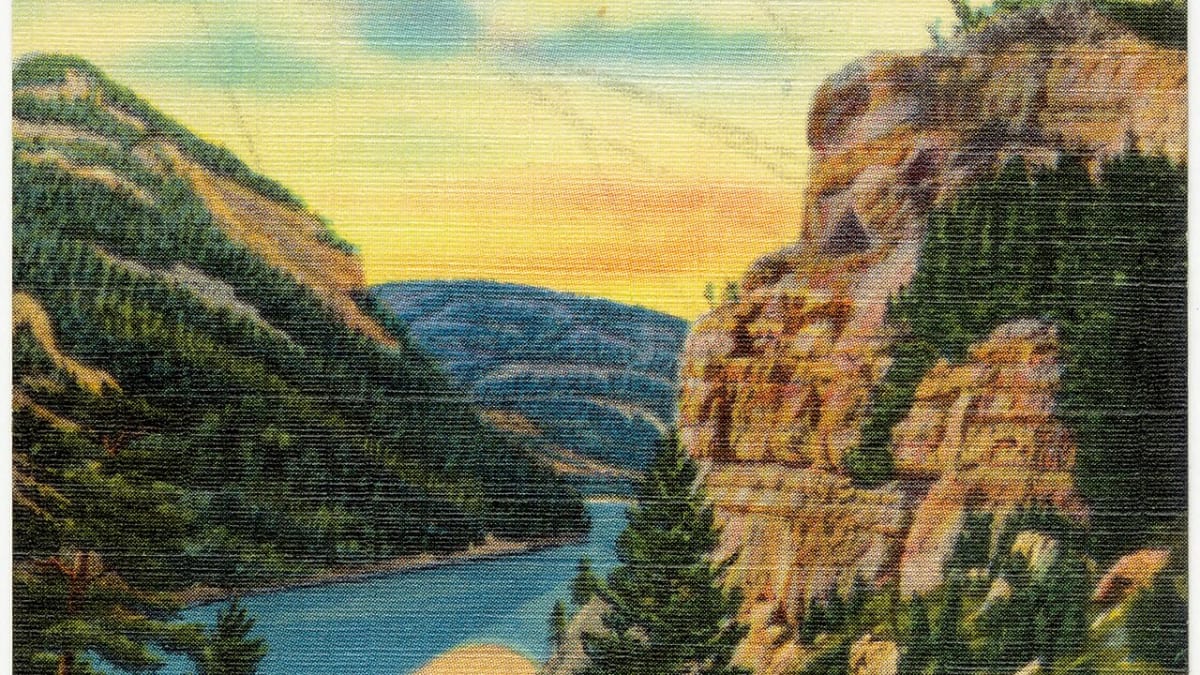
Gates of the Mountains
Gates of the Mountains Marina, Upper Holter Lake
Helena, MT
Limestone walls a thousand feet high that seem to open like a gate as your boat approaches, exactly as they did for Lewis and Clark in 1805.
The Gates of the Mountains is one of the most dramatic stretches of the Missouri River, a narrow canyon north of Helena where limestone cliffs climb roughly 1,200 feet straight up from the water. It got its name on the evening of July 19, 1805, when Meriwether Lewis, working his party upstream, wrote that the cliffs seemed to close off the river ahead and open only as they advanced. He called the place the Gates of the Rocky Mountains.
That optical trick still works. The best way to see the canyon is from a tour boat out of the marina, which carries you through the towering walls the way the expedition first saw them, past bald eagles and bighorn sheep, ancient pictographs, and the site of one of the most famous wildfire tragedies in American history.
What Travelers Love
- A boat tour through limestone cliffs that rise around a thousand feet from the water
- Standing where Lewis and Clark passed and reading the passage that named the place
- Watching bald eagles, bighorn sheep, and mountain goats on the canyon walls
- Ancient rock art and the sobering Mann Gulch wildfire story along the route
Worth Knowing
- The canyon is best experienced by the boat tour, which runs a summer season, so check the current schedule
- The optical illusion is the point: the cliffs appear to open only as the boat rounds the bends
- Bring a layer; the canyon can be cool and breezy even on a warm day
- Trips are popular in peak summer, so reserving ahead is a good idea
Learn about Gates of the Mountains
Where Lewis and Clark named the gate
On July 19, 1805, the Corps of Discovery was hauling and poling its way up the Missouri toward the mountains when it entered this canyon. Lewis described cliffs of nearly perpendicular rock rising to great height on both sides, so that the river seemed to have forced its way through, and noted that the passage looked closed until the boats rounded each bend. He named it, in his own spelling, the gates of the rocky mountains.
The name has stuck for more than two centuries, and the experience Lewis described is still the draw. As your boat threads the narrows, the walls ahead appear solid, then swing open to reveal the next reach of river, a slow reveal that gives the canyon its sense of gates opening one after another.
The boat tour through the canyon
Because there is no road through the heart of the canyon, the classic way to see it is on a tour boat from the Gates of the Mountains marina on the reservoir. The cruise runs roughly two hours, gliding beneath the limestone walls while a guide points out the geology, the wildlife, and the history along the way. The canyon is home to eagles, ospreys, bighorn sheep, mountain goats, and more than a hundred bird species.
Along the walls you can spot pictographs left by Native people long before the expedition passed through, faded red figures on the pale stone. The tour also glides past quiet coves and takes in the wide reservoir scenery, making it as much a peaceful river cruise as a history lesson.
The Mann Gulch fire
The canyon holds one of the most sobering chapters in the history of American wildfire. On August 5, 1949, a fire blew up in Mann Gulch, a steep drainage along the canyon, and outran a crew of smokejumpers who had parachuted in to fight it. Thirteen of the firefighters died. The tragedy reshaped how the country trains and equips wildland firefighters.
The story was told unforgettably in Norman Maclean's book Young Men and Fire, and the gulch is now a place many visitors want to see and reflect on. The boat tour passes the mouth of Mann Gulch, and the site remains a quiet memorial to the crew and to how much was learned at such a cost.
Wildlife and seasons
The canyon and the surrounding wilderness area make for excellent wildlife watching. Bighorn sheep and mountain goats work the cliff faces, bald and golden eagles nest on the walls, and deer, beaver, and the occasional black bear or mountain lion live in the drainages. Birders keep a long list here.
The boat tours run in the warmer months, roughly late spring through mid-September, which is also when the canyon is at its most inviting. Mornings are calm and good for wildlife and photography, while summer afternoons can bring wind and heat. The surrounding Gates of the Mountains Wilderness offers hiking for those who want to explore on foot.
Closest Boutels
The closest Boutel™ stays, so you can turn this stop into an overnight. Each is a place we chose through independent editorial review, never a paid placement.
Details
Helena, MT
Frequently asked questions
What are the Gates of the Mountains?
The Gates of the Mountains, on the Missouri River north of Helena in Montana, are a dramatic and beautiful canyon of towering limestone cliffs rising steeply from the river, famously named by the explorer Meriwether Lewis. As the Lewis and Clark expedition traveled up the Missouri, Lewis was so struck by the way the sheer cliffs seemed to open like gates as the boats approached that he named the canyon the Gates of the Mountains. Today, scenic boat tours carry visitors through the spectacular canyon, sharing the geology, history, wildlife, and Lewis and Clark lore amid stunning scenery. With its river canyon and history, the Gates of the Mountains offer a spectacular destination in Montana.
What can you do at the Gates of the Mountains?
You can take a scenic boat tour through the dramatic canyon of towering limestone cliffs along the Missouri River, learn about the geology, the Lewis and Clark expedition, and the wildlife, watch for bighorn sheep, eagles, and other animals, and take in the spectacular scenery. The scenic boat tour, the dramatic canyon cliffs, the Lewis and Clark history, and the wildlife are the draws, making it a memorable and relaxing outing on the river. Gliding through the towering gates is unforgettable. With its canyon and boat tours, the Gates of the Mountains offer a rewarding experience in Montana.
Why are they called the Gates of the Mountains?
They are called the Gates of the Mountains because when the explorer Meriwether Lewis of the Lewis and Clark expedition traveled up the Missouri River through this canyon in the early nineteenth century, he was struck by how the sheer limestone cliffs seemed to open and close like great gates as the boats moved forward, and he gave the canyon this evocative name in his journals. The name has endured, capturing the dramatic effect of the towering cliffs along the river. Understanding this history enriches a visit to the Gates of the Mountains in Montana.
When is the best time to visit the Gates of the Mountains?
The boat tours operate seasonally, generally from late spring through early fall, so the warm months are the time to take the scenic cruise through the canyon, with summer the peak and fall offering beautiful color and fewer crowds, while wildlife viewing is often good in the cooler parts of the day. Because tours are seasonal and run on a schedule, checking current times and reserving ahead before you go is wise. For the scenic boat tour, aim for late spring through early fall at the Gates of the Mountains in Montana.
What is near the Gates of the Mountains?
The Gates of the Mountains are on the Missouri River north of Helena, Montana, within reach of the capital city of Helena, the Missouri River country, and central Montana. That makes the Gates of the Mountains a spectacular stop to combine with Helena and the other attractions of central Montana on a visit to the state.
Nearby
Elkhorn Ghost Town
38 miles away
This one takes a little effort and rewards it. Elkhorn is a genuine silver-mining ghost town in the hills off the Boulder valley, and its two surviving showpieces, Fraternity Hall and Gillian Hall, ma...

Grant-Kohrs Ranch National Historic Site
48 miles away
People racing between Butte and Missoula rarely realize a working 1800s cattle ranch sits right off the interstate at Deer Lodge.
C.M. Russell Museum
56 miles away
Charlie Russell taught himself to paint while working as a cowboy, and more than anyone he set the look of the Old West that still lives in the American imagination.