
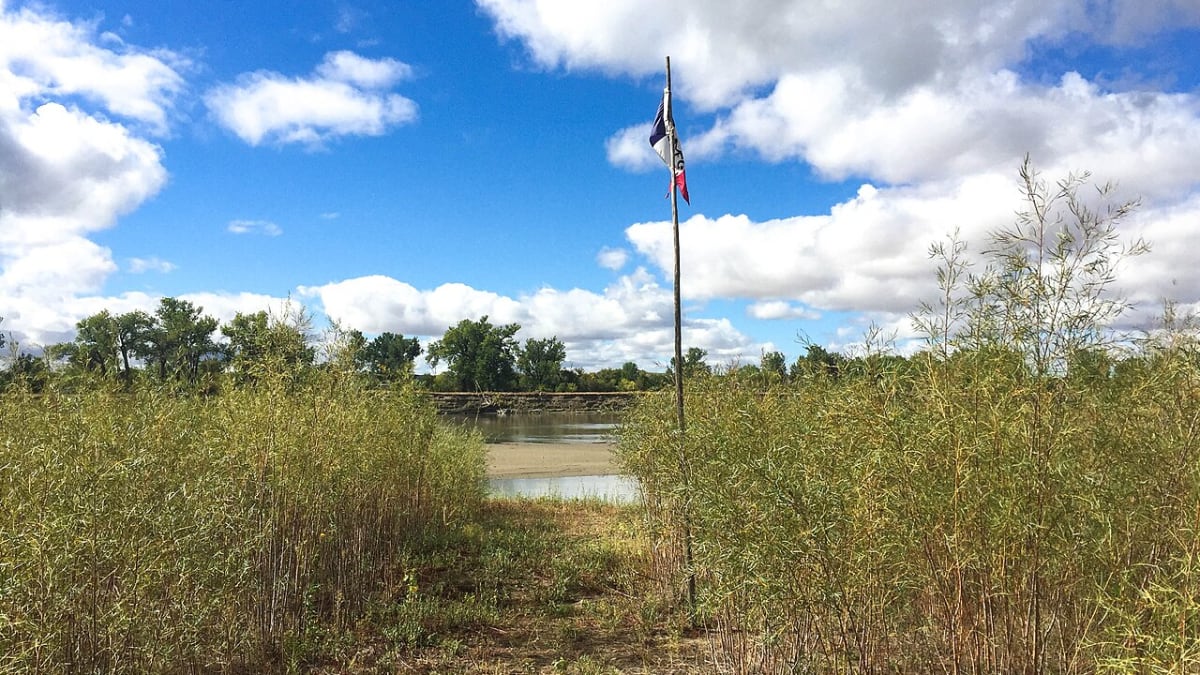
Fort Union Trading Post National Historic Site
15550 ND-1804, Williston, ND
Williston, ND
A grand reconstructed fur-trade fort on the upper Missouri, the crossroads where Northern Plains tribes and traders met for decades before the wagon trains.
Fort Union Trading Post National Historic Site is a grand, fully reconstructed fur-trade fort on the upper Missouri River, near where it joins the Yellowstone at the North Dakota-Montana line. For decades in the early and mid-1800s, the original Fort Union was the most important fur-trading post on the northern plains, a place where tribes of the region brought bison robes and furs to exchange for manufactured goods.
Unlike the military forts that came later, Fort Union was a place of commerce and diplomacy, run by the American Fur Company and depending on good relations with the Assiniboine, the Mandan, Hidatsa, and Arikara, the Crow, the Blackfeet, and other nations. The reconstructed fort, with its white walls and stately Bourgeois House, brings that crossroads back to life on the open river bottom.
What Travelers Love
- A grand, fully reconstructed fur-trade fort with white walls and a stately main house
- The story of decades of trade between Northern Plains tribes and the fur company
- Living-history demonstrations and a well-stocked trade room
- Its setting on the upper Missouri near the Yellowstone confluence
Worth Knowing
- The site is a careful reconstruction on the original footprint, with living-history programs mainly in the warmer months
- It sits right on the North Dakota-Montana line, so a visit easily combines with the nearby confluence area
- The fort tells a trade story of cooperation and exchange, distinct from the military forts of the region
- The prairie setting is open and exposed, so dress for wind and sun and bring water
Learn about Fort Union Trading Post National Historic Site
The great post of the upper Missouri
Fort Union was established in the early 1800s by the American Fur Company as the principal trading post on the upper Missouri. For roughly four decades it was the busiest fur post on the northern plains, where steamboats and keelboats brought trade goods up the river and carried bison robes and furs back down. It was a place of business first, and its success rested on relationships with the Native nations who supplied the trade.
Many tribes came to trade at Fort Union, among them the Assiniboine, the Crow, the Blackfeet, the Cree, the Ojibwe, and the Mandan, Hidatsa, and Arikara whose homeland lay downriver. At the post, Native and newcomer economies met, and goods, ideas, and people moved in both directions. The fort was also visited by artists and naturalists who left some of the earliest detailed records of the region and its peoples.
Trade, diplomacy, and daily life
Life at Fort Union revolved around the trade room, where furs and robes were exchanged for cloth, metal tools, beads, and other manufactured goods. The post was a small, diverse community of company men, laborers, interpreters, and their families, many of them of mixed Native and European heritage, and diplomacy was as important as commerce in keeping the trade flowing peacefully.
The reconstructed fort recreates this world. Visitors can walk the white palisade walls, enter the well-appointed Bourgeois House where the trader in charge lived, and step into the trade room stocked with the goods of the era. Living-history programs and demonstrations bring the daily rhythms of the post to life during the warmer months.
Decline and reconstruction
The fur trade that sustained Fort Union eventually collapsed as bison herds dwindled, tastes changed, and the U.S. Army moved into the region. The old fort was dismantled in the mid-1800s, its materials used to build a nearby military post, and for more than a century only the archaeological traces remained.
In the twentieth century, the National Park Service studied the site and reconstructed the fort on its original footprint, guided by paintings, records, and excavation. The result is one of the most complete and evocative reconstructions of a fur-trade post anywhere, giving visitors a vivid sense of the crossroads that once stood here.
The setting and the seasons
The fort sits on the north bank of the Missouri near its meeting with the Yellowstone, on open river bottom and prairie in the far northwest corner of North Dakota. The setting is broad and quiet, and a visit combines naturally with the nearby confluence area and its interpretive center just across the line.
Summer is the fullest season, with living-history programs, demonstrations, and the annual rendezvous drawing visitors, though the open prairie can be hot and windy, so sun protection helps. Fall is cooler and golden along the river, winter is cold and still, and spring greens the bottoms. Checking the program schedule ahead helps time a visit to the fort's liveliest days.
Closest Boutels
The closest Boutel™ stays, so you can turn this stop into an overnight. Each is a place we chose through independent editorial review, never a paid placement.
Details
Williston, ND
Frequently asked questions
What is the Fort Union Trading Post National Historic Site?
The Fort Union Trading Post National Historic Site, on the Montana-North Dakota border near the confluence of the Missouri and Yellowstone rivers, preserves a reconstruction of the most important fur-trading post on the upper Missouri, a great center of trade and cultural exchange in the nineteenth century. For decades, Fort Union was a bustling trading post where the American Fur Company traded with the Native nations of the northern plains, exchanging goods for furs and bringing together many peoples and cultures. The beautifully reconstructed fort, with its trade house, walls, and bastions, along with a museum and interpretation, tells this rich and complex history. A fascinating and historic trading post, it educates visitors. With its history, Fort Union offers a compelling destination in North Dakota.
What was Fort Union's role in the fur trade?
Fort Union was the most important fur-trading post on the upper Missouri River, a major center where the American Fur Company traded with the Native nations of the northern plains, including the Assiniboine, Crow, Hidatsa, and others, exchanging manufactured goods for furs, especially buffalo robes. It was a place of extensive commerce and cultural exchange that brought together traders and many Native peoples, with far-reaching and complex consequences for the region. The site interprets this history, including the Native peoples central to it. Understanding this history enriches a visit to the Fort Union Trading Post in North Dakota.
What can you see at the Fort Union Trading Post National Historic Site?
You can explore the beautifully reconstructed trading post, including the trade house, walls, and bastions, visit a museum with exhibits and artifacts, learn about the fur trade and the Native peoples who traded here, and, in season, see costumed interpreters and demonstrations. The reconstructed fort, the museum, the fur-trade history, and the interpretation of the Native peoples involved are the draws, offering a rich and thoughtful experience. The reconstructed trading post is a highlight. With its history, Fort Union offers a rewarding visit in North Dakota.
When is the best time to visit the Fort Union Trading Post National Historic Site?
The mild months of late spring through early fall are the most pleasant for exploring the outdoor fort and grounds, with fuller programming, costumed interpreters, and events in the warm season, while access is more limited in winter. Because programs and hours are seasonal, checking current information before you go is wise. For the fullest experience with interpretation, aim for late spring through early fall at the Fort Union Trading Post in North Dakota.
What is near the Fort Union Trading Post National Historic Site?
The Fort Union Trading Post National Historic Site is on the Montana-North Dakota border near the confluence of the Missouri and Yellowstone rivers, within reach of the Missouri-Yellowstone Confluence and its interpretive center, Lewis and Clark State Park, and the routes across northwestern North Dakota. That makes Fort Union a compelling stop to combine with the Missouri-Yellowstone Confluence and the other attractions of northwestern North Dakota on a visit to the state.
Nearby
Missouri-Yellowstone Confluence
1.1 miles away
Missouri-Yellowstone Confluence: below Fort Buford, about 22 miles southwest of Williston off ND-1804. The interpretive center sits on the bluff with a view over the meeting of the rivers.
Missouri-Yellowstone Confluence Interpretive Center
2.6 miles away
Missouri-Yellowstone Confluence Interpretive Center: off ND-1804 southwest of Williston, right beside Fort Buford. Admission may apply in season.
MonDak Heritage Center
20 miles away
Out on the North Dakota line, where most travelers are just passing through the oil country, Sidney keeps a museum worth the stop.