
Denali Park Road and Wildlife
Denali Park Road
Denali National Park, AK
A single ribbon of road running 92 miles into six million acres of wilderness, where you ride a bus and watch for grizzlies, caribou, and the highest peak in North America.
Denali National Park protects more than six million acres of the Alaska Interior, an expanse of tundra, braided rivers, and glaciated peaks larger than some states, and almost all of it is trailless, roadless wilderness. The single way in is the Denali Park Road, a 92-mile route that starts at the park entrance and threads west into the heart of the range, the only road in the entire park.
You do not simply drive it. Beyond an early checkpoint, private cars are turned back and visitors ride the park's buses, a system built on purpose to keep the wilderness quiet and the wildlife undisturbed. The reward is one of the best wildlife-watching experiences in North America, a slow ride where a driver stops for every grizzly, caribou band, and Dall sheep, all against the backdrop of Denali, the highest mountain on the continent.
What Travelers Love
- Riding deep into true wilderness on a bus while a driver spots grizzlies, moose, caribou, and Dall sheep
- The chance, on a clear day, to see Denali itself, the highest mountain in North America, rising above the tundra
- A landscape with no side roads, no development, and no crowds once you are past the entrance
- Sweeping open country where you can watch animals move across the land from a long way off
Worth Knowing
- Private vehicles can only drive the first stretch of the road; to go deeper you ride the park's shuttle and tour buses
- Denali makes its own weather and is often wrapped in cloud, so a clear view of the peak is never guaranteed, even up close
- This is grizzly country; keep your distance from all wildlife, never feed animals, and follow park bear-safety guidance on the trails
- The road and bus service are seasonal, roughly late spring through mid-September, and a landslide has affected access to the far end of the road in recent years, so check current conditions with the park
Learn about Denali Park Road and Wildlife
The story of the park and its road
This is the homeland of Athabascan peoples, who have lived in the Interior for thousands of years and who gave the great mountain its enduring name, Denali, meaning the high one or the tall one. That name was set aside for a century when the peak was officially called Mount McKinley, and in 2015 the mountain's name was formally restored to Denali, the name the land's first people always used.
The park was established in 1917, originally as Mount McKinley National Park, driven in large part by the naturalist and hunter Charles Sheldon, who pushed to protect the region's Dall sheep and other wildlife from market hunting. Its purpose from the start was as much a wildlife refuge as a scenic park.
The park road was built across the following decades to reach a hotel and the mining country at Kantishna at its far end. As visitation grew, the Park Service made a landmark decision in the 1970s to close most of the road to private cars and run visitors in by bus instead, a choice that has kept Denali's wildlife visible and its backcountry wild in a way few large parks manage.
In recent years a slow-moving landslide known as the Pretty Rocks landslide has damaged a section of the road partway out, closing access to the far reaches while engineers build a bridge across the slide. It is a reminder that in Denali the land itself is still moving.
The Big Five and the wildlife of the road
Denali is famous for what visitors call the Big Five: grizzly bear, moose, caribou, Dall sheep, and wolf. Because the tundra is open and treeless across much of the road, animals are often visible at a distance moving across the slopes and river bars, and a bus full of eyes tends to find them.
Grizzlies here are lighter, almost blond, from a diet heavy in roots and berries rather than salmon. Caribou drift through in bands as part of a migratory herd, Dall sheep, the animals the park was founded to protect, dot the high ridges in white, and moose browse the willow thickets near the entrance. Wolves range widely and are the rarest of the five to see, a genuine thrill when a pack crosses the road.
The smaller life is just as much a part of the show: golden eagles overhead, ptarmigan in the brush, hoary marmots and arctic ground squirrels on the rocks, and, in season, the tundra flushing with wildflowers and then blazing red and gold. Watching wildlife here means keeping a respectful distance and letting the animals set the terms, exactly as the bus system is designed to do.
The mountain and the land
Denali rises to about 20,310 feet, the highest point in North America, and because it stands above relatively low surrounding terrain, its rise from base to summit is one of the greatest of any mountain on Earth. It is so massive that it generates its own weather, and clouds hide it far more often than they reveal it. Visitors who catch a clear view sometimes say they have joined the thirty-percent club, a nod to how seldom the whole peak shows itself.
The park spans a huge range of country, from spruce forest near the entrance up through open tundra to glaciers and bare rock in the high Alaska Range. Braided glacial rivers, gray with rock flour ground fine by the ice, spread across wide gravel bars below the road.
All of it is protected as wilderness. There are few maintained trails beyond the entrance area by design, so travel in the backcountry is open-ended and unmarked, a landscape meant to stay wild rather than be groomed for visitors.
Season by season
Summer is the heart of the season, when the road is open, the buses run, and the tundra is green and busy with wildlife and long daylight. It is the only practical time for most visitors to travel deep into the park.
Late spring sees the road and services just coming online, with lingering snow on the peaks and animals moving onto fresh green growth.
Fall arrives early and fast: by late August and into September the tundra turns brilliant red and gold, the crowds thin, and there is a real chance of the first snow and of the northern lights on dark nights, before the road closes for the year.
Winter shuts the road entirely and buries the park in deep cold and snow. The entrance area stays open for skiing, dog mushing, and aurora watching, but the wilderness beyond belongs to the animals and the dark.
Closest Boutels
The closest Boutel™ stays, so you can turn this stop into an overnight. Each is a place we chose through independent editorial review, never a paid placement.
Details
Denali National Park, AK
Frequently asked questions
What is the Denali Park Road and its wildlife?
The Denali Park Road is the single, unforgettable road that penetrates deep into the wilderness of Denali National Park in Alaska, offering breathtaking scenery and some of the finest wildlife viewing in North America. This long gravel road winds through tundra, past rivers and mountains, and, on clear days, toward views of the great mountain, while travelers, mostly aboard park buses, watch for grizzly bears, moose, caribou, Dall sheep, wolves, and other wildlife roaming free in their vast natural home. The journey along the road is a highlight of any Denali visit. A spectacular wilderness road and wildlife experience, it awes visitors. With its scenery and animals, the Denali Park Road offers a spectacular experience in Alaska.
How do you travel the Denali Park Road?
Beyond a certain point, the Denali Park Road is largely traveled by park buses rather than private vehicles, a system that protects the wilderness and its wildlife while letting visitors venture deep into the park to view scenery and animals. Buses range from narrated tour buses to hop-on, hop-off transit buses, and arrangements, along with how far the road is open, can vary by year and conditions, so checking current road access, bus options, and reservations before you go is important. Planning your bus trip ahead ensures a rewarding journey on the Denali Park Road in Alaska.
What wildlife can you see along the Denali Park Road?
Along the Denali Park Road you may see grizzly bears, moose, caribou, Dall sheep on the high slopes, wolves, foxes, and a variety of birds, all roaming free in their vast wild home, making it one of the great wildlife-viewing experiences in North America. The chance to see the famous large mammals of Alaska in the wild is the main draw, and bringing binoculars greatly enhances the experience. Sightings are never guaranteed but often thrilling. With its abundant wildlife, the Denali Park Road offers a rewarding experience in Alaska.
What should I know before traveling the Denali Park Road?
The Denali Park Road passes through the home of grizzly bears and other wild animals, so keeping a very safe distance from all wildlife, never feeding animals, staying with your bus or group as directed, and following all park guidance are essential for safety. The road is long, gravel, and weather-dependent, and how far it is open can change year to year, so checking current access before you go and dressing in warm layers for the changeable weather are important. Respecting wildlife and planning ahead ensure a safe, rewarding trip on the Denali Park Road in Alaska.
What is near the Denali Park Road?
The Denali Park Road runs from the entrance area of Denali National Park deep into its wilderness in Alaska's Interior, within reach of the park entrance visitor center and services, the town of Talkeetna to the south, and Fairbanks to the north. That makes the Denali Park Road the heart of a Denali visit, to combine with the attractions of the Fairbanks area on a trip to Alaska.
Nearby

Savage River
12 miles away
The Savage River, around mile 15 of the Denali Park Road, is the farthest point most private vehicles can drive into the park, and a lovely place to stretch your legs.

Eielson Visitor Center
48 miles away
Eielson Visitor Center sits around mile 66 of the Denali Park Road, near the heart of the park, and offers what many consider the finest views of Denali anywhere along the road.
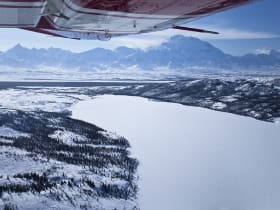
Wonder Lake
63 miles away
Wonder Lake lies deep in Denali National Park, near the far end of the long Park Road, and is famous for its mirror reflections of Denali, the tallest mountain in North America, rising more than 18,00...