
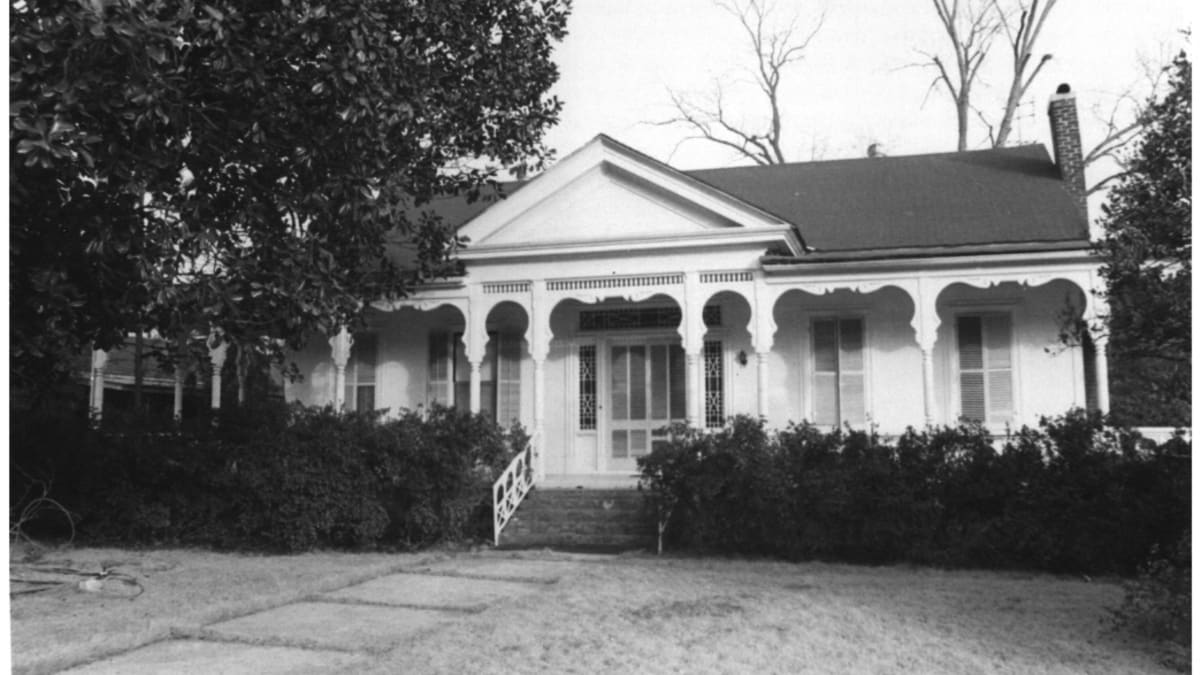
Daniel Pratt Historic District
606 Pinecrest Dr, Prattville, AL
Prattville, AL
A whole 19th-century factory town of brick and stone set along a rocky creek, built by a Yankee mechanic who made Prattville one of the South's first industrial centers.
The Daniel Pratt Historic District preserves what was once one of the largest industrial complexes in the antebellum South, a planned village of mills, worker cottages, churches, and shops strung along Autauga Creek in the town that still bears its founder's name. Daniel Pratt, a carpenter and mechanic from New Hampshire, came south in the 1830s and built a cotton gin factory here that grew into a company town, one of the earliest large-scale manufacturing operations in a region built almost entirely on agriculture.
What makes the district worth a stop is how much of it survives together. Rather than a lone historic house, you can walk streets lined with the actual mill buildings, tidy cottages, and civic structures of a working 19th-century town, with Autauga Creek spilling over rock ledges through the middle of it. It is a rare chance to read an entire industrial community in the landscape rather than a single restored building.
What Travelers Love
- Walking the creekside path past the old brick and stone mill buildings
- The rare survival of an entire planned industrial village, not just a single landmark
- Autauga Creek tumbling over rock ledges right in the middle of town
- A compact, unhurried downtown with local shops and cafes nearby
Worth Knowing
- Many of the historic buildings are private property or repurposed, so admire them from the public streets and paths
- The creekside walkways can be uneven and slick near the water, so watch your footing
- Summer in central Alabama is hot and humid, so plan a walk for the morning or evening
- Parking is easiest downtown, from which most of the district is within an easy stroll
Learn about Daniel Pratt Historic District
The man who built a town
Daniel Pratt was born in New Hampshire in 1799 and trained as a carpenter before heading south as a young man, eventually settling in the Alabama backcountry. In the early 1830s he chose a site on Autauga Creek, where the falling water could power machinery, and began manufacturing cotton gins. His gins earned a reputation for quality across the cotton South, and the business grew into the largest of its kind in the world by the mid-1800s.
Around the factory Pratt laid out a complete village, with housing for workers, a school, churches, and stores, an unusual thing in a rural, plantation-based economy. He was one of the leading voices in the region arguing that the South should build its own industry rather than depend entirely on cotton and imported manufactured goods. When Pratt died in 1873, the town of Prattville had grown up around his enterprise, and it carries his name to this day.
A mill village you can walk
The heart of the district is the cluster of brick and stone mill buildings along Autauga Creek, some dating to the earliest decades of the operation. Over the years the complex expanded from cotton gins into cotton textile manufacturing, and the sturdy industrial buildings you see reflect generations of that work. Many have been repurposed over time, but their scale and materials still speak plainly of what they were.
Surrounding the mills is the rest of the planned town: rows of worker cottages, older churches, and a compact downtown. Walking the streets and the creekside paths, you get a sense of how the whole community was organized around the water and the factory, a layout that historians study as an early example of Southern industrial town planning.
Autauga Creek and the water that powered it
Autauga Creek was the reason the town exists. It drops over a series of rocky ledges as it passes through Prattville, and that falling water was harnessed to turn the wheels and machinery of the early mills. The creek still tumbles through the middle of the district, and the sound of moving water is part of the character of a walk here.
The name Autauga comes from a Muscogee (Creek) word tied to the people who lived in this part of central Alabama long before the mill town rose. The creek and the surrounding country were Muscogee homeland for generations, and the waterway kept its Indigenous name even as the industrial village grew up along its banks.
Prattville today and how to visit
Prattville has grown into a suburb on the edge of the Montgomery metro area, but the historic core along the creek has kept its old bones. A stroll takes you past the mill buildings, cottages, and downtown storefronts, with interpretive markers explaining what you are seeing. It is an easy add-on to a Montgomery visit or a stop while traveling through the River Region.
The best plan is simply to park downtown and walk. Central Alabama summers are hot and humid, so an early-morning or evening visit is more comfortable, and the light on the old brick is best then too. Local shops and cafes near the district make it easy to turn a short history walk into a relaxed afternoon.
Closest Boutels
The closest Boutel™ stays, so you can turn this stop into an overnight. Each is a place we chose through independent editorial review, never a paid placement.
Details
Prattville, AL
Frequently asked questions
What is the Daniel Pratt Historic District?
The Daniel Pratt Historic District, in Prattville near Montgomery, Alabama, preserves the historic core of a town founded by the industrialist Daniel Pratt, one of the South's early manufacturing pioneers. In the nineteenth century, Pratt built a major industrial enterprise here, including the famous cotton gin works, and established the town around it, and the district today preserves historic mill buildings, homes, churches, and streetscapes reflecting that industrial heritage along Autauga Creek. A window into early Southern industry and a charming historic town, the district invites visitors to explore its architecture and history. With its industrial heritage and historic buildings, the Daniel Pratt Historic District offers a fascinating destination in Alabama.
Who was Daniel Pratt?
Daniel Pratt was a nineteenth-century industrialist and one of the early manufacturing pioneers of the South, who built a major industrial enterprise in Alabama, most famously a large cotton gin manufacturing works, and founded the town of Prattville around it. His industrial vision made the town an important early center of Southern manufacturing, and much of the historic district bears his legacy in its mills, buildings, and layout. Understanding Pratt's role in early Southern industry adds context to the historic mills and streetscapes preserved in the Daniel Pratt Historic District in Prattville, Alabama.
What can you do in the Daniel Pratt Historic District?
You can explore the historic district on foot, admiring the preserved nineteenth-century mill buildings, historic homes, churches, and streetscapes along Autauga Creek, learn about Daniel Pratt and the early Southern industry he built, and enjoy the charming small-town setting of Prattville. The historic industrial architecture, the creekside setting, and the town's heritage are the draws, offering a pleasant and educational stroll through a piece of Southern industrial history. Interpretive markers help tell the story. With its historic buildings and heritage, the Daniel Pratt Historic District offers an engaging experience in Alabama.
When is the best time to visit the Daniel Pratt Historic District?
The mild months of spring through fall offer the most pleasant weather for strolling the walkable historic district and enjoying the creekside setting, with spring and fall especially comfortable, while the holiday season brings festive charm to Prattville. Any mild-weather day is enjoyable for exploring the architecture and town. For the most pleasant weather to stroll the historic district, aim for spring through fall at the Daniel Pratt Historic District in Prattville, Alabama.
What is near the Daniel Pratt Historic District?
The Daniel Pratt Historic District is in Prattville near Montgomery, Alabama, within reach of downtown Montgomery with its Civil Rights landmarks, the Montgomery Zoo and Mann Wildlife Museum, the Wetumpka impact crater to the northeast, and the central Alabama countryside. That makes the Daniel Pratt Historic District a fascinating stop to combine with the Montgomery attractions and the other historic sites of central Alabama on a visit to the state.
Nearby
Dexter Avenue King Memorial Baptist Church
11 miles away
It looks like an ordinary red-brick church, and that is exactly what makes it striking.

Alabama State Capitol Steps
11 miles away
For a quick stop that holds two eras of history at once, climb Dexter Avenue to the Alabama State Capitol.
Montgomery Zoo and Mann Wildlife Museum
12 miles away
The Montgomery Zoo is an easy win with kids, laid out so animals live across moats in open habitats rather than behind bars, which makes the zebras, tigers, and bears feel close.
Wetumpka Impact Crater Rim
16 miles away
Most people drive through Wetumpka without realizing the whole town sits inside a meteor crater.