
Craters of the Moon National Monument
1266 Craters Loop Rd
Arco, ID
A sea of black lava, cinder cones, and lava-tube caves so strange that NASA sent Apollo astronauts here to learn how to explore another world.
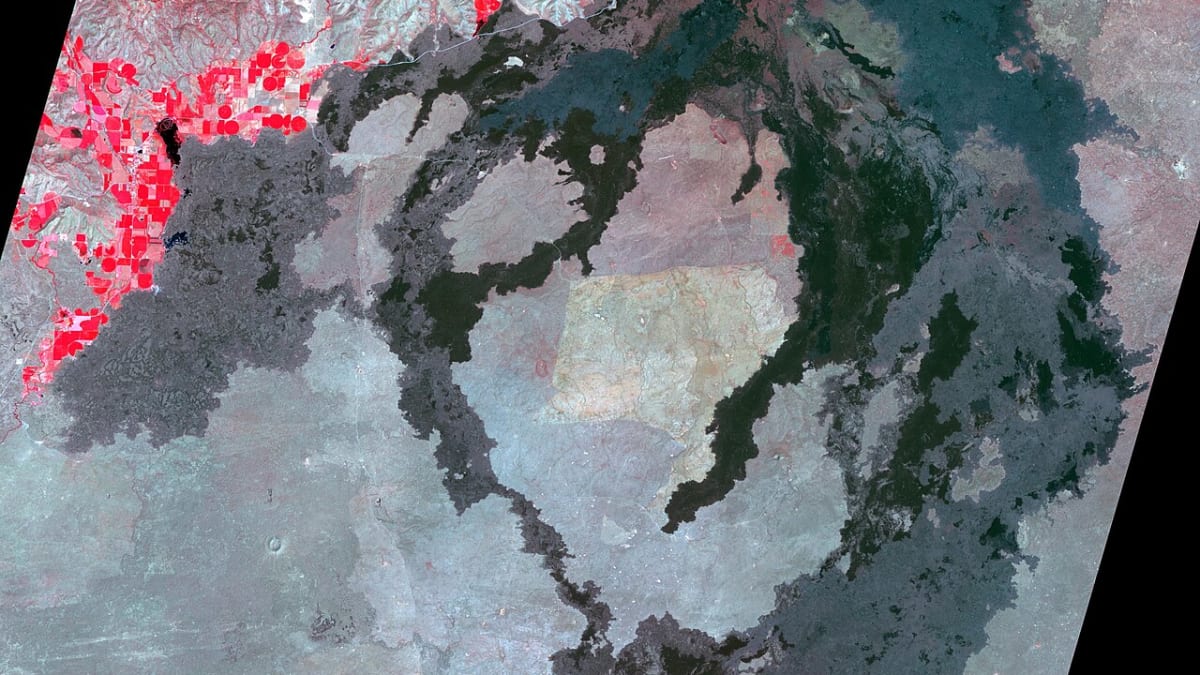
Craters of the Moon National Monument protects one of the most surreal landscapes in the United States: a rippling, black expanse of hardened lava, cinder cones, and deep cracks spread across the high plain of central Idaho. The name is no exaggeration. The ground looks so much like another planet that in 1969 NASA brought Apollo astronauts here to study volcanic geology before they walked on the Moon.
Yet this is not the leftover of some single ancient cataclysm. The lava here is young by geologic standards, and the forces that made it are only sleeping. Craters of the Moon is one of the youngest volcanic areas in Idaho, and geologists consider it among the most likely places in the state to erupt again.
What Travelers Love
- Driving and walking through a genuinely lunar landscape of black lava, spatter cones, and cinder gardens
- Climbing Inferno Cone for a sweeping view over the whole volcanic field
- Exploring lava-tube caves with a headlamp on the Caves Trail
- Some of the darkest skies in the country, certified for stargazing
Worth Knowing
- Caving requires a free permit and clean gear to protect bats from white-nose syndrome; ask at the visitor center
- The black lava radiates heat, so summer days are brutally hot with almost no shade; carry lots of water
- The scenic Loop Road typically closes with snow in winter, when the field becomes a ski and snowshoe route
- An entrance fee applies, and footing on lava is sharp and uneven, so wear sturdy shoes
Learn about Craters of the Moon National Monument
The Great Rift and eight ages of fire
The heart of the monument is the Great Rift, a system of cracks in the earth's crust running about 62 miles across the Snake River Plain. Instead of a single volcano, lava here welled up from these long fissures, spreading in sheets and building cinder cones, spatter cones, and lava tubes.
The eruptions came in roughly eight major pulses between about 15,000 and 2,000 years ago, with the most recent ending around 2,100 years ago. Because they are so young and this desert is so dry, the flows are remarkably fresh, and scientists note that with eruptions about every 3,000 years, the field is likely only dormant, not dead.
Walking the volcanic field
A loop road and a set of short trails put the landscape within easy reach. You can climb the steep black slope of Inferno Cone for a panorama over the whole field, wander the delicate Spatter Cones, and cross flows named for their ropey and rubbly textures.
The Caves Trail leads to lava tubes, tunnels left where the surface of a flow hardened while molten rock drained away beneath. With a headlamp and a free permit, you can step underground into the cool dark of caves like Indian Tunnel and Boy Scout Cave.
A Shoshone and Bannock homeland
People have known this place for a very long time. Archaeological evidence shows Shoshone people visited the area as far back as roughly 12,000 years ago, and it is likely they witnessed some of the eruptions. Northern Shoshone shelters, hunting blinds, and tool sites remain, including places where they gathered a glassy lava for making arrow points.
Craters of the Moon lies within the ancestral homelands of the Shoshone and Bannock peoples, who traveled through it for thousands of years between salmon-fishing rivers, buffalo grounds, and camas-digging meadows. Their descendants remain in the region, and the monument now works to tell that history in their own words.
Wildlife, dark skies, and seasons
Life is tougher to spot here but it is present: pikas and marmots in the rubble, mule deer and pronghorn on the sage flats, and wildflowers like dwarf buckwheat and monkeyflower that bloom brilliantly against the black cinders in early summer.
The monument is certified for its dark skies, and on a clear night the stars over the lava are extraordinary. Late spring and early summer bring wildflowers and tolerable temperatures; midsummer is punishingly hot on the black rock; and winter closes the Loop Road to cars but opens it to skiers and snowshoers.
Closest Boutels
The closest Boutel™ stays, so you can turn this stop into an overnight. Each is a place we chose through independent editorial review, never a paid placement.
Details
Arco, ID
Frequently asked questions
What is Craters of the Moon National Monument?
Craters of the Moon National Monument, in south-central Idaho, is a vast and otherworldly volcanic landscape of black lava flows, cinder cones, spatter cones, and lava tube caves that looks so much like the moon that astronauts once trained here. Formed by eruptions along a great rift over thousands of years, this stark, fascinating terrain offers a scenic loop drive, hiking trails across the lava, caves to explore, and remarkable geology, along with some of the darkest night skies in the country. Both alien and beautiful, it is a geologic wonderland. With its dramatic lava fields, caves, and dark skies, Craters of the Moon National Monument offers a spectacular destination in Idaho.
What can you do at Craters of the Moon National Monument?
You can drive the scenic loop road through the lava landscape, hike trails across cinder cones, lava flows, and spatter cones, explore lava tube caves with a flashlight, climb a cinder cone for views, camp, stargaze under exceptionally dark skies, and marvel at the otherworldly volcanic geology. The loop drive, the cave exploring, and the cinder-cone hikes are highlights. A visitor center explains the volcanic story. With its lava trails, caves, scenic drive, and dark skies, Craters of the Moon National Monument offers a fascinating outdoor experience in south-central Idaho.
What should I know before exploring the caves at Craters of the Moon?
To explore the lava tube caves, you typically need a free permit from the visitor center, part of an effort to protect bats from disease, so ask about current cave access and bring a flashlight or headlamp, sturdy shoes, and a helmet if possible, as the caves are dark, rocky, and uneven. Wear layers, as caves are cool. On the lava fields, the black rock gets extremely hot in summer and is sharp and rough, so carry plenty of water, wear sturdy shoes, and use sun protection. Being prepared for the caves, heat, and rough lava ensures a safe visit to Craters of the Moon in Idaho.
When is the best time to visit Craters of the Moon National Monument?
Late spring and fall offer the most comfortable weather for hiking the lava, which absorbs heat and becomes dangerously hot in summer, when temperatures on the black rock soar, while spring can bring wildflowers to the stark landscape. Summer is popular but hot, so early morning is best then. Winter brings snow and limited access but stark beauty. Clear, moonless nights any season offer superb stargazing. For the most comfortable hiking, aim for late spring or fall, avoiding summer midday heat, at Craters of the Moon National Monument in Idaho.
What is near Craters of the Moon National Monument?
Craters of the Moon National Monument is in south-central Idaho, within reach of the towns of Arco and Carey, the Sawtooth region and Sun Valley to the northwest, the Central Idaho Dark Sky Reserve, and Idaho Falls to the east. That makes Craters of the Moon a spectacular stop to combine with the Sawtooth region, the Central Idaho Dark Sky Reserve, and the other attractions of central and southern Idaho on a visit to the state.
Nearby

Massacre Rocks State Park and Register Rock
57 miles away
Massacre Rocks sits on the Snake River along a stretch of the Oregon and California Trails, and the trail history is what makes it worth pulling off I-86.

Idaho Museum of Natural History
67 miles away
The Idaho Museum of Natural History at Idaho State University focuses specifically on the natural and cultural history of Idaho and the Intermountain West, which gives its fossil galleries a depth tha...
Galena Summit Overlook
67 miles away
Galena Summit is the high point on Hwy 75 between Ketchum and Stanley.