
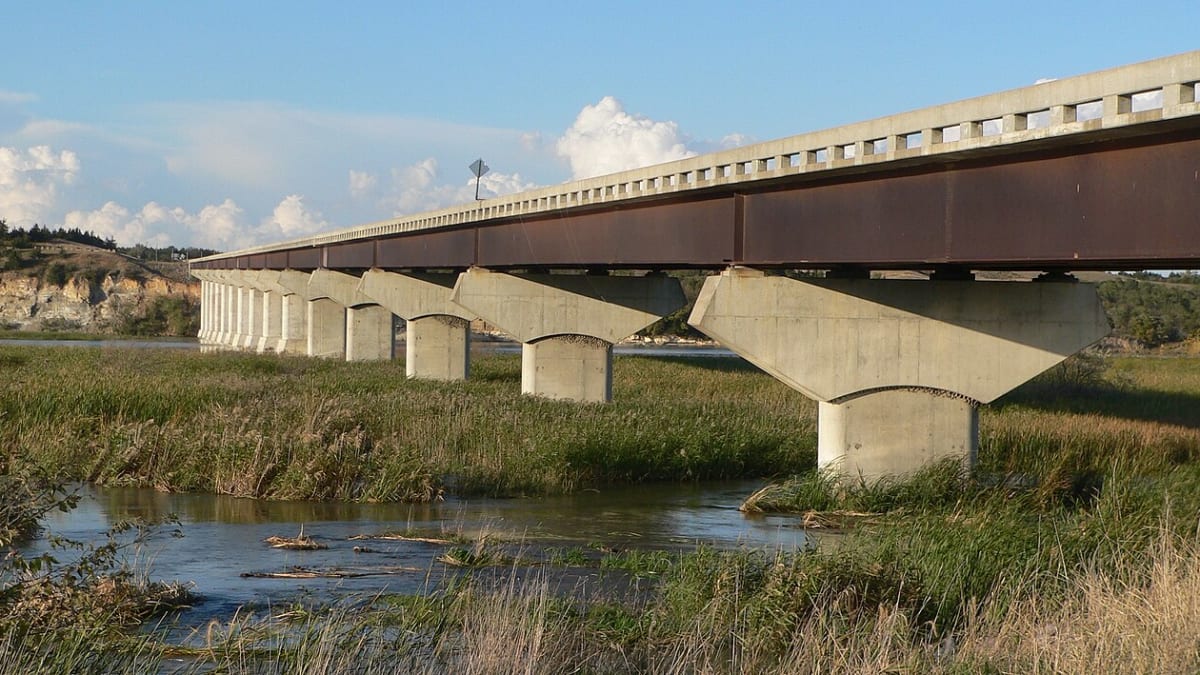
Chief Standing Bear Memorial Bridge
Niobrara Trail, Niobrara, NE
Niobrara, NE
A bridge over the Missouri that carries the name of Standing Bear, the Ponca chief whose journey home won Native Americans standing as persons under the law.
Where the Niobrara River empties into the Missouri, a bridge crosses the water carrying the name of one of the most important figures in Native American history. Standing Bear was a chief of the Ponca people, whose homeland lies at this very confluence, and the bridge honors a man whose grief and courage forced the United States to recognize Native Americans as persons under the law.
The Ponca were forcibly removed from this land in 1877, marched south to Indian Territory in what is now Oklahoma, where many died. When Standing Bear's son died there, the chief set out to carry his body home to be buried in Ponca ground. His arrest and the trial that followed became a landmark in the long, hard fight for Native civil rights, and this bridge stands in the country he was trying to reach.
What Travelers Love
- Crossing the wide Missouri where the Niobrara pours in
- Learning the story of Standing Bear and his landmark trial
- The meeting of two great rivers and the wildlife along them
- A quiet, meaningful landmark far from the crowds
Worth Knowing
- The bridge carries a highway, so use pullouts and viewpoints rather than stopping on the span
- Nearby Niobrara State Park gives the best river overlooks and trails
- This is Ponca homeland, so treat the story and its sites with respect
- The area is remote, so plan fuel and stops between towns
Learn about Chief Standing Bear Memorial Bridge
The Ponca and their homeland
The Ponca are a Plains people whose homeland centers on the mouth of the Niobrara, where it joins the Missouri, the very country this bridge crosses. For generations they lived here as farmers and hunters, tending gardens along the rivers and following the buffalo out onto the plains. Today the Ponca continue as two federally recognized tribes, the Ponca Tribe of Nebraska and the Ponca Tribe of Oklahoma.
In 1877 the United States forced the Ponca from this homeland and marched them hundreds of miles south to Indian Territory, a removal made in error and carried out over their protests. The journey and the unfamiliar, sickly conditions at the end of it cost many Ponca lives, including that of Standing Bear's own son.
Standing Bear's journey home
When his son died in Indian Territory, Standing Bear resolved to honor a promise to bury the boy in the homeland along the Niobrara. In the winter, he and a small group set out north on foot, carrying the boy's remains, determined to reach Ponca ground even though they had no permission to leave the reservation.
The army arrested Standing Bear and his companions in Nebraska and prepared to send them back. But a newspaper editor and sympathetic lawyers took up their cause, and the case went to federal court in Omaha in 1879. There Standing Bear spoke his famous words, holding out his hand and saying that the blood that flowed in it was the same color as the blood of the men who would judge him, that he too was a man.
A ruling that changed the law
In the case of Standing Bear v. Crook, the federal judge ruled that a Native American was a person within the meaning of the law and could not be held or removed without cause, a decision that established Native Americans as persons with legal rights they had been denied. It did not undo all the injustice the Ponca and other tribes faced, but it was a genuine turning point in American civil rights.
Standing Bear was freed and eventually allowed to remain in his homeland, and he lived out his years along the Niobrara. His name now marks this bridge, along with schools, statues, and honors across the state and beyond, keeping alive the memory of a chief who won recognition of his people's humanity through the courts.
The rivers and the country around it
The bridge crosses one of the great river junctions of the plains, where the clear, spring-fed Niobrara meets the broad, muddy Missouri. It is rich country for wildlife, with waterfowl, eagles, deer, and the wooded bottomlands that have always drawn both people and game.
Nearby Niobrara State Park offers overlooks, trails, and canoeing that let you take in the confluence, and the town of Niobrara sits close by. The whole area rewards a slow visit, tying the deep history of the Ponca to the living rivers that shaped it.
Closest Boutels
The closest Boutel™ stays, so you can turn this stop into an overnight. Each is a place we chose through independent editorial review, never a paid placement.
Details
Niobrara, NE
Frequently asked questions
What is the Chief Standing Bear Memorial Bridge?
The Chief Standing Bear Memorial Bridge, crossing the Missouri River between Nebraska and South Dakota near Niobrara in northeastern Nebraska, is a bridge named in honor of Chief Standing Bear, the Ponca leader whose courageous stand for the rights of Native peoples made history. The bridge and its name commemorate Standing Bear, who in a landmark nineteenth-century case won a ruling recognizing that a Native American is a person under the law, a pivotal moment in the struggle for civil rights. The crossing links the two states over the wide Missouri near the Ponca homeland. A meaningful landmark honoring a great leader, it invites reflection. With its tribute to Chief Standing Bear, the bridge offers a meaningful destination in Nebraska.
Who was Chief Standing Bear?
Chief Standing Bear was a leader of the Ponca people who became a landmark figure in the history of Native American and civil rights. After the Ponca were forcibly removed from their homeland, Standing Bear undertook a difficult journey to return and bury his son, and in a historic court case, a ruling recognized for the first time that a Native American is a person within the meaning of the law, with rights the courts must protect. His courage and dignity left a lasting legacy. The bridge honors his memory, and learning his story deepens a visit in Nebraska.
Why is the Chief Standing Bear Memorial Bridge meaningful?
The Chief Standing Bear Memorial Bridge is meaningful because it honors a Ponca leader whose stand for justice affirmed the humanity and legal rights of Native peoples, a landmark in the long struggle for civil rights. Located near the Ponca homeland where Standing Bear's story unfolded, the bridge stands as a lasting tribute to his courage and to the dignity of his people. Its name carries a story worth knowing and reflecting upon. Understanding this legacy enriches a visit to the Chief Standing Bear Memorial Bridge in Nebraska.
What should I know before visiting the Chief Standing Bear Memorial Bridge?
The Chief Standing Bear Memorial Bridge is an active highway crossing over the Missouri River, so it is best appreciated from safe vantage points and nearby areas rather than by stopping on the bridge itself, and taking care with traffic is important. The setting near Niobrara offers river scenery and connections to the Ponca heritage of the region and to nearby Niobrara State Park. Approaching the area with awareness of its history adds meaning. Viewing it safely and reflecting on its story ensure a meaningful visit to the Chief Standing Bear Memorial Bridge in Nebraska.
What is near the Chief Standing Bear Memorial Bridge?
The Chief Standing Bear Memorial Bridge is near Niobrara in northeastern Nebraska, crossing the Missouri River toward South Dakota, within reach of Niobrara State Park, the Missouri and Niobrara rivers, and the routes across northeastern Nebraska. That makes the bridge a meaningful stop to combine with Niobrara State Park and the other attractions of northeastern Nebraska on a visit to the state.
Nearby

Niobrara State Park
2.3 miles away
Niobrara State Park: near the town of Niobrara off Highway 12, where the Niobrara meets the Missouri. Nebraska state park permit required.
Ashfall Fossil Beds State Historical Park
24 miles away
Ashfall Fossil Beds State Historical Park: near Royal, off Highway 20 in Antelope County, about 40 miles northwest of Norfolk. Nebraska state park permit plus park admission required.

Missouri National Recreational River
28 miles away
Missouri National Recreational River: a 59-mile wild reach below Gavins Point Dam at Yankton, with a second stretch downstream toward Ponca, Nebraska.