
Champion Mill State Historical Park
326 Ave, Champion, NE
Champion, NE
The last water-powered flour mill left in Nebraska, its wooden machinery still standing beside a quiet millpond in the southwest corner of the state.
In the days before railroads and centralized flour production, nearly every farming community needed a mill, a place where the local wheat could be ground into flour close to home. Water was the cheapest power there was, so mills clustered along creeks that ran fast enough to turn a wheel. Champion Mill, built in the late 1800s beside a fork of Frenchman Creek, was one of these, and it is now the last water-powered flour mill left standing in Nebraska.
Preserved as a small state historical park, the mill still holds its wooden works, its grinding equipment, and the pond that supplied its power. Walking through it, you can trace how creek water was captured, channeled, and turned into the force that ground grain into the flour that fed a frontier town.
What Travelers Love
- A rare, intact wooden flour mill with its original machinery in place
- The peaceful millpond and the creek that once powered the wheels
- A glimpse of the milling technology that fed frontier communities
- Quiet, uncrowded country far from any interstate
Worth Knowing
- The mill building is open seasonally, so check ahead before you drive out
- The millpond is a pleasant spot for a picnic and a stroll
- This is remote southwest Nebraska, so plan for distances between towns
- Pair it with the Republican River valley and Enders Reservoir nearby
Learn about Champion Mill State Historical Park
The mill that ground the frontier's bread
A mill was the beating heart of an early farming settlement. Farmers hauled their wheat in by wagon, and the miller ground it into flour, often taking a portion of the grain as payment rather than cash. A community that had its own mill did not have to freight its grain long distances to be processed, which made the difference between prosperity and hardship on the frontier.
Champion Mill was built to serve exactly this need for the farms of southwest Nebraska. Powered by the flow of Frenchman Creek, it turned local wheat into flour for decades, evolving over time from stone grinding to the roller technology that modernized American milling. It kept working into the twentieth century, long after most water mills had shut down.
How water became power
The mill worked by capturing the creek behind a small dam to form a millpond, then releasing that stored water through a channel to drive the mill's machinery. Inside, a system of shafts, belts, and gears carried the power up to the grinding equipment, which crushed and sifted the wheat into flour and its byproducts.
The wooden structure and its surviving works let you read this whole process in place, from the water intake to the grinding floors above. It is a rare thing to see intact, because most such mills were demolished, burned, or gutted once electricity and big commercial mills made them obsolete. Champion's survival makes it a working textbook of frontier-era engineering.
A tiny town preserved around it
The community of Champion grew up around the mill, and the two are inseparable. As the mill drew farmers in with their grain, a small cluster of homes and businesses took shape, the kind of self-sufficient rural node that once dotted the plains wherever water and land came together.
Southwest Nebraska is Republican River country, a landscape of wheat, cattle, and wide horizons that has always run on agriculture. Champion Mill is a monument to the technology that once anchored places like this, before roads and rails pulled the milling away to the cities.
Seasons by the millpond
Summer is the main season, when the mill is typically open and the millpond makes an inviting spot for a shaded picnic. The creek country greens up and the long days suit a leisurely stop off the main roads.
Fall brings golden light to the water and cooler air for exploring the grounds, and the harvest season fits the mill's agricultural story. Winter is quiet and cold in this open corner of the state, and spring greens the valley as the creek runs high with the season's rain.
Closest Boutels
The closest Boutel™ stays, so you can turn this stop into an overnight. Each is a place we chose through independent editorial review, never a paid placement.
Details
Champion, NE
Frequently asked questions
What is Champion Mill State Historical Park?
Champion Mill State Historical Park, near Imperial in the southwestern Nebraska Panhandle, preserves a historic water-powered flour mill, the last of its kind in the state, on the banks of a peaceful millpond. This charming nineteenth-century mill, powered by the flowing water, ground grain into flour for the surrounding farming communities, and the park preserves the mill with its historic machinery, along with the scenic millpond that offers a tranquil setting for picnicking, fishing, and relaxing. It is a lovely and evocative piece of Nebraska's agricultural and industrial heritage. A peaceful and historic spot, it delights visitors. With its historic mill and pond, Champion Mill offers a charming destination in Nebraska.
What can you do at Champion Mill State Historical Park?
You can tour or view the historic water-powered flour mill with its old machinery, enjoy the scenic millpond, picnic in the peaceful setting, and fish or relax along the water. The historic mill, the tranquil millpond, the picnic areas, and the sense of stepping into the past are the draws, making it a peaceful and interesting stop. The preserved mill and its setting evoke a quieter era. With its mill and pond, Champion Mill State Historical Park offers a rewarding experience in Nebraska.
Why is Champion Mill significant?
Champion Mill is significant as the last remaining water-powered flour mill in Nebraska, a rare survivor of the era when such mills were essential to farming communities, grinding the grain that sustained the region. Its preserved machinery and its scenic millpond setting offer a tangible connection to Nebraska's agricultural and industrial past. The park protects this heritage for visitors to appreciate. Understanding this history enriches a visit to Champion Mill State Historical Park in Nebraska.
When is the best time to visit Champion Mill State Historical Park?
The mild months of spring through fall are the most pleasant for enjoying the millpond, picnicking, and exploring the grounds, while access to the mill's interior may be seasonal, so the warmer months are the surest time to see it fully. Because hours and mill access vary by season, checking the current schedule before you go is wise. For pleasant weather and the fullest access, aim for spring through fall at Champion Mill State Historical Park in Nebraska.
What is near Champion Mill State Historical Park?
Champion Mill State Historical Park is near Imperial in the southwestern Nebraska Panhandle, within reach of Imperial, Enders Reservoir, the Republican River country, and the routes across southwestern Nebraska. That makes Champion Mill a charming stop to combine with the other attractions of southwestern Nebraska on a visit to the state.
Nearby
Arikaree Breaks Overlook
38 miles away
Arikaree Breaks: accessible via county roads north of St. Francis, KS in Cheyenne County (approximately lat 39.908, lng -101.770). No formal trailhead or facilities. Drive north from St.

Ash Hollow State Historical Park
58 miles away
Ash Hollow State Historical Park: about 3 miles south of Lewellen on Highway 26, in Garden County. Most travelers on the Panhandle loop drive past without knowing the ruts are here.
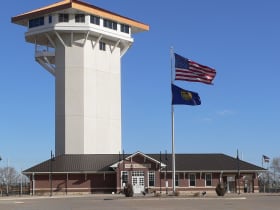
Golden Spike Tower and Bailey Yard
69 miles away
Golden Spike Tower: on North Homestead Road on the north side of North Platte, overlooking Bailey Yard.