

Cadillac Ranch
12821 I-40, Amarillo, TX
Amarillo, TX
Ten old Cadillacs planted nose-first in a Panhandle field, buried at the same angle as the Great Pyramid and repainted daily by everyone who visits.
Cadillac Ranch is one of the most famous roadside attractions in America, a row of ten old Cadillacs buried nose-down in a Texas Panhandle wheat field, their tail fins jutting toward the sky. It was created in 1974 by a group of artists called Ant Farm, backed by an eccentric Amarillo millionaire, as a tribute to the golden age of the American automobile and its ever-changing tail fin, one car for each year from the late 1940s through the early 1960s.
What makes it truly unusual is that it never stops changing. Visitors are invited, even expected, to spray-paint the cars, so the whole installation is repainted many times over, day after day, in an endless cycle of fresh color. It has become a beloved pilgrimage along old Route 66, a piece of participatory pop art that belongs a little bit to everyone who has ever added a stripe or a name to its shifting, crusted surface.
What Travelers Love
- Spray-painting the cars yourself, adding a fresh layer to an ever-changing artwork
- The strange, striking sight of ten Cadillacs half-buried in a row
- A free, open, no-reservations roadside stop right off the interstate
- The pure Route 66 spirit of quirky, do-it-yourself Americana
Worth Knowing
- The cars are meant to be painted; bring spray paint, and pack out your empty cans
- It sits in an open field, so wear shoes for mud after rain and expect Panhandle wind
- There is a short walk from the roadside gate out to the cars across the field
- It is free and open air; there are no services at the site itself
Learn about Cadillac Ranch
The making of an icon
Cadillac Ranch was the brainchild of Ant Farm, an avant-garde collective of artists and architects, funded by Stanley Marsh 3, a wealthy Amarillo helium heir and prankster with a taste for the strange. In 1974 they planted ten Cadillacs nose-first into a field along Route 66 west of town, angling them, by legend, to match the slope of the Great Pyramid of Giza.
The cars were chosen to trace the evolution of the tail fin, that soaring chrome flourish that defined American car design at mid-century, spanning models from the late 1940s to the early 1960s. As the interstate grew and the surrounding city crept outward, the whole installation was later moved farther west to keep it in open country, but the concept never changed: a monument to the automobile, dropped into the wide Panhandle landscape.
A canvas that never stops changing
Almost from the beginning, people began marking the cars, and rather than fight it, the tradition was embraced. Today spray-painting the Cadillacs is the whole point, and visitors come with cans in hand to add their names, messages, and colors to the ever-thickening crust of paint that coats every surface. No two days look alike.
That constant repainting has turned Cadillac Ranch into a living, communal artwork, one that is remade continuously by strangers from all over the world. The paint builds up in layers so thick it becomes part of the sculpture, and the cars have been repainted solid colors for special occasions and events over the years, only to disappear again under a fresh riot of graffiti within days.
Route 66 and the road-trip spirit
Cadillac Ranch sits along the corridor of Route 66, the fabled Mother Road that once carried travelers across the country and still draws road-trippers chasing its old motels, diners, and neon. Amarillo was a major stop on that route, and the buried Cadillacs fit perfectly into its tradition of oversized, offbeat roadside spectacle built to catch the eye of passing drivers.
It captures something essential about the American road trip: free, open to everyone, a little absurd, and impossible to forget. There is no gate fee and no schedule, just a field, a walk, and ten cars waiting to be painted. That accessibility is part of why it has become such a fixture, a stop that families, bikers, and international travelers all fold into their crossing of the Panhandle.
Visiting the ranch
The site is free and open to the air, reached by a short walk from a roadside gate out across the field to the cars. Bring your own spray paint if you want to take part, and please pack out your empty cans; the trade-off for an open, unattended landmark is that visitors help keep it from becoming a dump. After rain the field can be muddy, and the Panhandle wind is nearly constant, so dress accordingly.
Because it is right off the interstate on the edge of Amarillo, Cadillac Ranch pairs easily with the rest of the city's stops, from the American Quarter Horse museum to the Botanical Gardens, and with a longer Route 66 drive. It is best enjoyed in the spirit it was made: playful, a little irreverent, and open to anyone who wants to leave their mark.
Closest Boutels
The closest Boutel™ stays, so you can turn this stop into an overnight. Each is a place we chose through independent editorial review, never a paid placement.
Details
Amarillo, TX
Frequently asked questions
What is Cadillac Ranch?
Cadillac Ranch, in a field just west of Amarillo in the Texas Panhandle, is a famous public art installation and roadside landmark consisting of ten vintage Cadillac cars half-buried nose-down in a row in the dirt, their tail fins pointing to the sky. Created in the nineteen-seventies by an art collective, the ever-changing installation invites visitors to spray-paint the cars, so the layers of colorful graffiti are constantly repainted by the people who come, making it a living, participatory work of art. Free and always open, it is one of the most iconic stops on the old Route 66. With its buried Cadillacs and graffiti tradition, Cadillac Ranch offers a fun and iconic roadside destination near Amarillo, Texas.
Can you spray-paint the cars at Cadillac Ranch?
Yes, spray-painting the cars is the whole tradition at Cadillac Ranch, and visitors are welcome and even encouraged to add their own graffiti to the ever-changing installation, so many bring a can of spray paint to leave their mark, and the cars are repainted countless times over. If you forget paint, sometimes leftover cans can be found, though bringing your own is best. Please spray only the cars themselves and take your empty cans with you to help keep the site clean. This hands-on, participatory tradition is what makes Cadillac Ranch such a fun and unique stop near Amarillo, Texas.
What should I know before visiting Cadillac Ranch?
Cadillac Ranch sits in an open field reached by a short walk from a pull-off along the highway, so wear shoes suitable for dirt that can be muddy after rain, bring your own spray paint if you want to participate, and pack out your empty cans, as the site has few facilities. It is free and open at all hours, but the exposed field offers no shade, so bring water and sun protection in warm weather. Being prepared for the walk and the open field, and cleaning up after yourself, ensures an enjoyable visit to Cadillac Ranch near Amarillo, Texas.
When is the best time to visit Cadillac Ranch?
Cadillac Ranch is free and open around the clock year-round, so it can be visited any time, with daytime best for seeing and photographing the colorful cars and adding your own paint, while spring and fall offer the most comfortable weather for the exposed field. The site can be muddy after rain, so drier conditions are easier for the walk. Sunrise and sunset offer lovely light on the Panhandle plains. For the most comfortable weather and good light, aim for a dry day in spring or fall, though Cadillac Ranch is a fun stop any time near Amarillo, Texas.
What is near Cadillac Ranch?
Cadillac Ranch is just west of Amarillo in the Texas Panhandle, along the old Route 66 corridor, within reach of the Amarillo Botanical Gardens, the American Quarter Horse Hall of Fame, Palo Duro Canyon State Park, and the Panhandle-Plains Historical Museum at Canyon. That makes Cadillac Ranch a fun stop to combine with Palo Duro Canyon, the Panhandle-Plains Historical Museum, and the other attractions of the Texas Panhandle on a visit to the state.
Nearby
Amarillo Botanical Gardens
4.1 miles away
Most visitors pass Amarillo on the interstate without knowing this is a block off the route.
American Quarter Horse Hall of Fame & Museum
10 miles away
Recommended for ages 6 and up, especially horse-minded kids. Highlights: life-size bronze horses out front, a short film, and galleries on famous horses and the working ranch. Admission is charged.
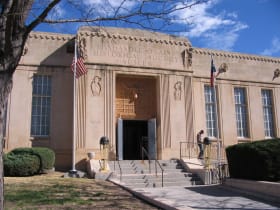
Panhandle-Plains Historical Museum
15 miles away
Recommended for ages 5+. Highlights: dinosaur fossil gallery, Pioneer Hall with general store and blacksmith shop you can walk through, Transportation Gallery with old cars and planes, and hands-on pr...