
Bottomless Lakes State Park
Park Srv Rd, Roswell, NM
Roswell, NM
A chain of deep, jewel-toned sinkhole lakes tucked below rust-red bluffs on the Pecos plain, the first state park New Mexico ever set aside.
Southeast of Roswell, at the foot of a line of rust-red bluffs on the Pecos plain, the desert opens into a surprise, a chain of deep, jewel-colored lakes. These are sinkholes, formed where underground water dissolved the gypsum and salt bedrock until the ground collapsed, and springs kept them filled with cool, clear, blue-green water. Early settlers, unable to touch bottom with their ropes, decided the lakes were bottomless.
They are not truly bottomless, but they are deep, clear, and beautiful, and in 1933 they became the first state park in New Mexico. Today visitors come to swim in the largest lake, to camp beneath the bluffs, and to dive into the surprising depths, all in a landscape whose vivid colors and strange geology set it apart from anything else around Roswell.
What Travelers Love
- Swimming in the cool, clear waters of Lea Lake, the largest of the sinkholes
- The deep blue-green color of the lakes glowing against red desert bluffs
- Scuba diving in the surprisingly deep, clear sinkhole waters
- Camping and picnicking in a striking landscape most travelers never expect in the desert
Worth Knowing
- Lea Lake is the main lake for swimming and has a beach, while several smaller lakes are for viewing only
- The lakes are deep and cold, fed by underground springs, so even strong swimmers should take care
- Summer is the season for swimming; the water and air are cold much of the rest of the year
- The dissolved minerals give the water its color and can leave a mineral film, which is natural
Learn about Bottomless Lakes State Park
How the lakes formed
The Bottomless Lakes are sinkholes, called cenotes in some parts of the world, formed in gypsum and salt bedrock laid down when an ancient sea covered this region. Over long stretches of time, groundwater dissolved cavities in that soluble rock until the roofs collapsed, leaving deep, steep-walled pits that filled with spring-fed water from the aquifer below.
The water gets its striking blue-green color from the minerals dissolved in it and from the depth and clarity of the pools. The name came from early cowboys who lowered weighted ropes and could not find the bottom, giving rise to the legend that the lakes had no floor at all. In truth the deepest reaches only tens of feet, but the name and the mystery have stuck.
Swimming, diving, and the lakes
A string of separate lakes runs along the base of the bluffs, each with its own character and name. The largest, Lea Lake, is the center of the park's activity, with a beach, a swimming area, and warm-weather crowds cooling off in its clear water. Several of the smaller lakes are set aside for viewing and quiet reflection rather than swimming.
The clear, deep water also draws scuba divers, who explore the underwater walls and the strange world of a desert sinkhole. Because the lakes are fed by cold springs and reach real depths, even in summer the water is bracing, and divers and swimmers alike should respect the cold and the depth. Boating on the smaller lakes is limited, keeping them calm and clear.
Bluffs, trails, and camping
Behind the lakes rise the Seven Rivers Hills, a line of rust-red gypsum-and-shale bluffs that glow at sunrise and sunset and frame the blue-green pools below. Trails lead along and above the lakes, giving views down into the sinkholes and out across the Pecos plain, and interpretive signs explain the unusual geology and the wildlife that gathers at the water.
The park keeps campgrounds and picnic areas near the lakes, so travelers can spend a night beneath the bluffs and the wide desert sky. A nearby stretch of wetland along the Pecos draws birds and other wildlife, tying the park to the larger network of desert oases, including Bitter Lake refuge, that make the Roswell area a surprising haven for water and life.
Seasons and visiting
Summer is the season for Bottomless Lakes, when the warm air makes swimming in the cool water a joy and the campgrounds fill up. Spring and fall are pleasant for hiking, camping, and photography, with mild days and fewer crowds, while winter is cold and quiet, the lakes still and glassy beneath the frosted bluffs.
Whenever you come, the park rewards an unhurried visit, time to swim, walk the bluff trails, and watch the light change on the water and rock. It is an easy and memorable side trip from Roswell, and paired with nearby Bitter Lake refuge, it makes the Pecos plain around Roswell a genuinely surprising corner of New Mexico.
Closest Boutels
The closest Boutel™ stays, so you can turn this stop into an overnight. Each is a place we chose through independent editorial review, never a paid placement.
Details
Roswell, NM
Frequently asked questions
What is Bottomless Lakes State Park?
Bottomless Lakes State Park, near Roswell in southeastern New Mexico, holds the distinction of being New Mexico's first state park, and it is known for a series of small, deep, strikingly blue-green lakes that are actually sinkholes, formed when underground caverns collapsed and filled with water. The name comes from early cowboys who, unable to touch bottom, believed the lakes were bottomless, though they are not. Set amid reddish bluffs and desert scenery, the lakes offer swimming, scuba diving, kayaking, fishing, camping, and hiking. With its unusual deep sinkhole lakes and scenic desert setting, Bottomless Lakes State Park offers a distinctive and refreshing outdoor destination near Roswell.
Why are the lakes at Bottomless Lakes State Park called bottomless?
The lakes earned the name bottomless from early cowboys who, when they lowered ropes to measure the depth, could not touch the bottom, partly because the ropes were pulled by underwater currents and the lakes are quite deep, leading them to believe the lakes had no bottom. In reality, the lakes are sinkholes with measurable depths, the deepest around ninety feet, formed by the collapse of underground caverns dissolved in the rock. Though not truly bottomless, the deep, mysterious blue-green waters and their surprising depth in the desert give the lakes their evocative name and much of their intrigue and appeal.
What can you do at Bottomless Lakes State Park?
You can swim in the designated lake, scuba dive in the deep, clear waters, which draw divers to the unusual sinkhole lakes, kayak and paddle, fish, camp at the campground, hike the trails amid the reddish bluffs and desert scenery, and enjoy picnicking and wildlife viewing. The distinctive deep lakes and scenic setting make it a rewarding outing. The visitor center offers information about the geology. With its swimming, scuba diving, paddling, camping, and unusual sinkhole lakes in a beautiful desert setting, Bottomless Lakes State Park offers a fun and distinctive outdoor experience near Roswell in southeastern New Mexico.
When is the best time to visit Bottomless Lakes State Park?
Late spring through early fall is the prime season for swimming, paddling, and water activities in the warm weather, with summer popular for cooling off in the lakes despite the heat, while spring and fall offer pleasant temperatures for hiking and camping with fewer crowds. Winter is cool and quiet. The lakes stay cold due to their depth, so swimming is refreshing. For water recreation and warm weather, aim for late spring through early summer or early fall, and for comfortable hiking and camping, the milder shoulder seasons are ideal at Bottomless Lakes State Park.
What is near Bottomless Lakes State Park?
Bottomless Lakes State Park is near Roswell in southeastern New Mexico, famous for its UFO history and the International UFO Museum, near the Bitter Lake National Wildlife Refuge, and within reach of the Pecos River country and, farther south, Carlsbad with its caverns. That makes Bottomless Lakes State Park a distinctive stop to combine with Roswell's UFO attractions, the Bitter Lake refuge, and the other attractions of southeastern New Mexico on a visit to the state.
Outside the Park
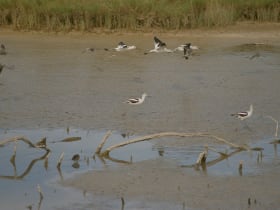
Bitter Lake National Wildlife Refuge
9.8 miles away
The auto tour loop is the key here for families: you drive slowly along the wetlands and watch huge flocks without needing anyone to hike or stay quiet.
Living Desert Zoo and Gardens State Park
65 miles away
Living Desert does something most zoos do not: it shows animals that live specifically in the desert immediately surrounding the park.