
Big Thicket National Preserve
1785 Old Cemetery Rd, Kountze, TX
Kountze, TX
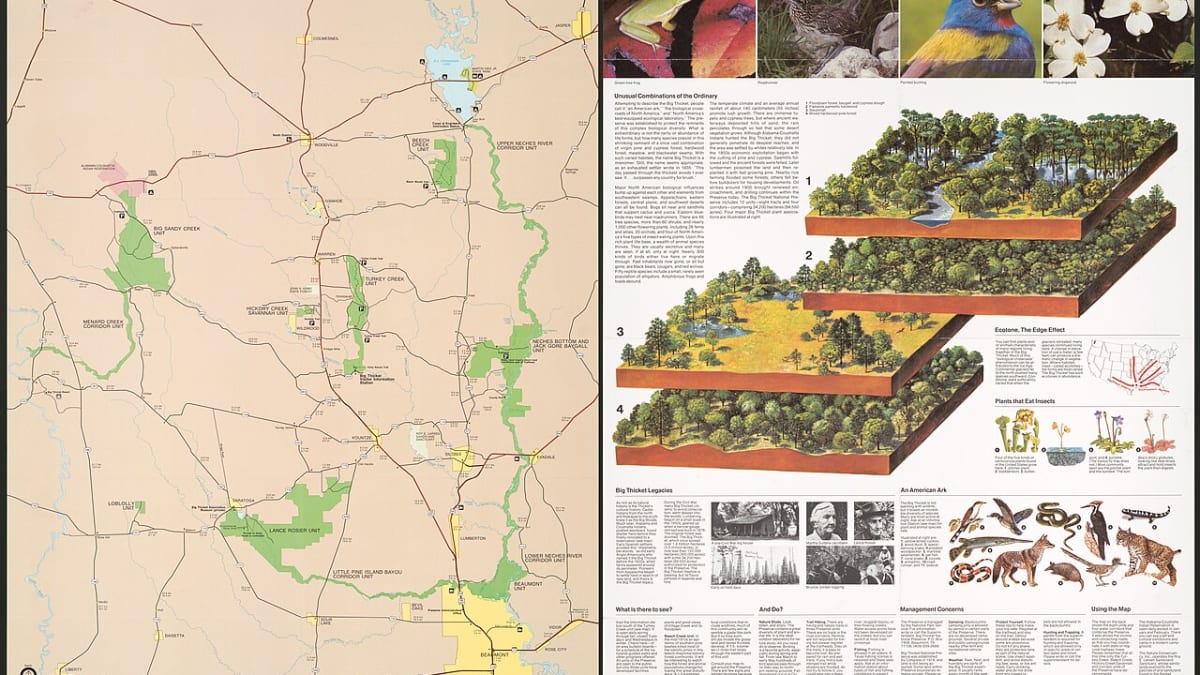
A wild tangle of swamp, pine forest, prairie, and bog where the ecosystems of North America collide, even down to carnivorous plants that eat insects.
Big Thicket National Preserve protects one of the most biologically diverse places in North America, a wild, tangled crossroads in the Piney Woods of southeast Texas where several great ecosystems meet and overlap. In a short walk you can pass from tall pine forest into cypress swamp, from open prairie into acid bog, each with its own community of plants and animals.
It earned an early nickname as an American ark for the sheer richness of life it holds, and it became one of the first national preserves in the country in 1974. Among its most famous residents are carnivorous plants, pitcher plants and sundews that lure, trap, and digest insects, growing in nutrient-poor bogs. All of it is knit together by slow bayous and the Neches River, dark and quiet under a canopy of cypress and pine.
What Travelers Love
- Walking trails that pass from pine forest to swamp to bog in a short distance
- Finding carnivorous pitcher plants and sundews that trap and digest insects
- Paddling the quiet, cypress-lined bayous and Neches River backwaters
- The astonishing variety of birds, plants, and wildlife packed into one preserve
Worth Knowing
- The preserve is a patchwork of separate units, so pick your trails and units before you go
- Warm months bring heat, humidity, and mosquitoes; spring and fall are more comfortable
- Some trails cross wet or boggy ground, so waterproof footwear helps
- Carnivorous plants and other rare species are protected; look but do not disturb them
Learn about Big Thicket National Preserve
A crossroads of ecosystems
The Big Thicket sits at a biological meeting point, where the swamps of the southeastern United States, the eastern hardwood forests, the central plains, and the arid southwest all edge together. The result is an extraordinary overlap of habitats packed into a relatively small area: longleaf pine uplands, hardwood floodplains, cypress swamps, wetland savannas, and acidic bogs, often within sight of one another.
That variety supports a staggering range of life. The preserve is home to a huge number of bird species, along with mammals, reptiles, amphibians, and a botanical roster that includes hundreds of kinds of trees, shrubs, wildflowers, ferns, and orchids. It is this concentration of diversity, more than any single dramatic feature, that makes the Big Thicket special, a living demonstration of how many worlds can meet in one place.
Plants that eat insects
In the wet, acidic bogs of the preserve grow plants that turn the tables on the animal world. Pitcher plants form tall, hollow tubes that fill with fluid and lure insects to slide down inside, while sundews spread sticky, glistening leaves that catch small prey, and bladderworts and butterworts add to the array. In soils too poor to supply enough nutrients, these plants get what they need by digesting insects.
They are among the Big Thicket's most beloved oddities, and the wetland savannas where they grow are protected and delicate. Boardwalks and trails let visitors see them up close without trampling the fragile bog, and they make an unforgettable sight, a reminder that the swampy edges of East Texas hide botanical marvels found in few other places.
The people of the Thicket
This dense country was long home and hunting ground for Indigenous peoples, including the Atakapa and the Caddo of East Texas, and the Alabama-Coushatta, whose reservation lies at the edge of the Thicket and whose people remain here today. The forest's tangled cover shaped how people lived, moved, and hid within it across generations.
In later eras the Thicket earned a reputation as a refuge for those who wanted to be left alone, hunters, settlers, and others who used its dense forests and swamps as cover. Logging companies eyed its timber, and it was the fight to save the last of the great woods from clearing that led, after a long conservation battle, to the creation of the national preserve in the 1970s.
Hiking, paddling, and visiting
Big Thicket is not one block of land but a patchwork of separate units scattered across the region, so it pays to choose your trails and put-ins before you arrive. Foot trails wind through pine forest, hardwood bottoms, and boggy savannas, and boardwalks carry visitors over the wettest ground to see the carnivorous plants and cypress sloughs.
The other great way to experience the preserve is by water. Paddling the quiet bayous and the Neches River leads you into a slow, dark, cypress-lined world alive with birds, turtles, and the occasional alligator. Spring and fall bring the most comfortable weather; the warm months are hot, humid, and buggy, so plan accordingly and bring insect protection whenever you visit.
Closest Boutels
The closest Boutel™ stays, so you can turn this stop into an overnight. Each is a place we chose through independent editorial review, never a paid placement.
Details
Kountze, TX
Frequently asked questions
What is Big Thicket National Preserve?
Big Thicket National Preserve, in Southeast Texas north of Beaumont, protects a remarkable and biologically diverse wilderness where several distinct ecosystems meet, earning it the nickname the biological crossroads of North America. Within its scattered units, dense forests, swamps, bayous, prairies, and sandhills blend, supporting an astonishing variety of plants and animals, including carnivorous pitcher plants, orchids, and abundant birds and wildlife. Trails, paddling routes, and quiet backcountry invite exploration of this lush, wild landscape. With its extraordinary biodiversity, forests, swamps, and trails, Big Thicket National Preserve offers a fascinating natural destination in Southeast Texas.
What can you do at Big Thicket National Preserve?
You can hike the trails through diverse forests, swamps, and prairies, paddle the bayous and waterways, watch for the preserve's remarkable wildlife and plants including carnivorous pitcher plants and orchids, birdwatch, camp in the backcountry, and explore the many scattered units each with its own character. Hiking and paddling amid the rich biodiversity are the main draws. A visitor center helps you plan among the units. With its varied trails, paddling, and extraordinary plant and animal life, Big Thicket National Preserve offers a rewarding nature experience in Southeast Texas.
What should I know before visiting Big Thicket National Preserve?
The preserve is spread across many separate units, so stopping at the visitor center or checking maps to plan which areas to explore is helpful. The Southeast Texas climate is hot and very humid in the warm months with abundant insects, so bring water, sun protection, and insect repellent, and wear appropriate footwear for muddy, wet trails. Watch for snakes, alligators in the waterways, and biting insects, and stay on trails. Coming prepared for the heat, humidity, insects, and wildlife ensures an enjoyable visit to Big Thicket National Preserve in Southeast Texas.
When is the best time to visit Big Thicket National Preserve?
Fall through spring offers the most comfortable weather for hiking and paddling, with milder temperatures and fewer insects than the hot, humid, buggy summer, when conditions can be oppressive though the preserve is lush. Spring brings blooming plants, including the famous carnivorous pitcher plants, and pleasant weather, while fall offers comfortable conditions and color. Winter is mild and quiet. For the best combination of comfortable weather and fewer insects, aim for fall through spring, with spring lovely for wildflowers, at Big Thicket National Preserve in Southeast Texas.
What is near Big Thicket National Preserve?
Big Thicket National Preserve is in Southeast Texas north of Beaumont, near Martin Dies Jr. State Park and the Neches River, within reach of the Piney Woods of East Texas and the Houston area and Gulf Coast to the south. That makes Big Thicket National Preserve a fascinating nature stop to combine with Martin Dies Jr. State Park and the other attractions of Southeast Texas on a visit to the state.
Nearby
Martin Dies Jr. State Park
35 miles away
The park is on US-190 between Jasper and Woodville, spread across several units along the lake.

San Jacinto Monument
61 miles away
San Jacinto Battleground State Historic Site: 3523 Independence Parkway, La Porte (25 miles east of downtown Houston). Free to walk the grounds and visit the museum.