
Bahia Honda State Park
36850 FL-5, Big Pine Key, FL
Big Pine Key, FL
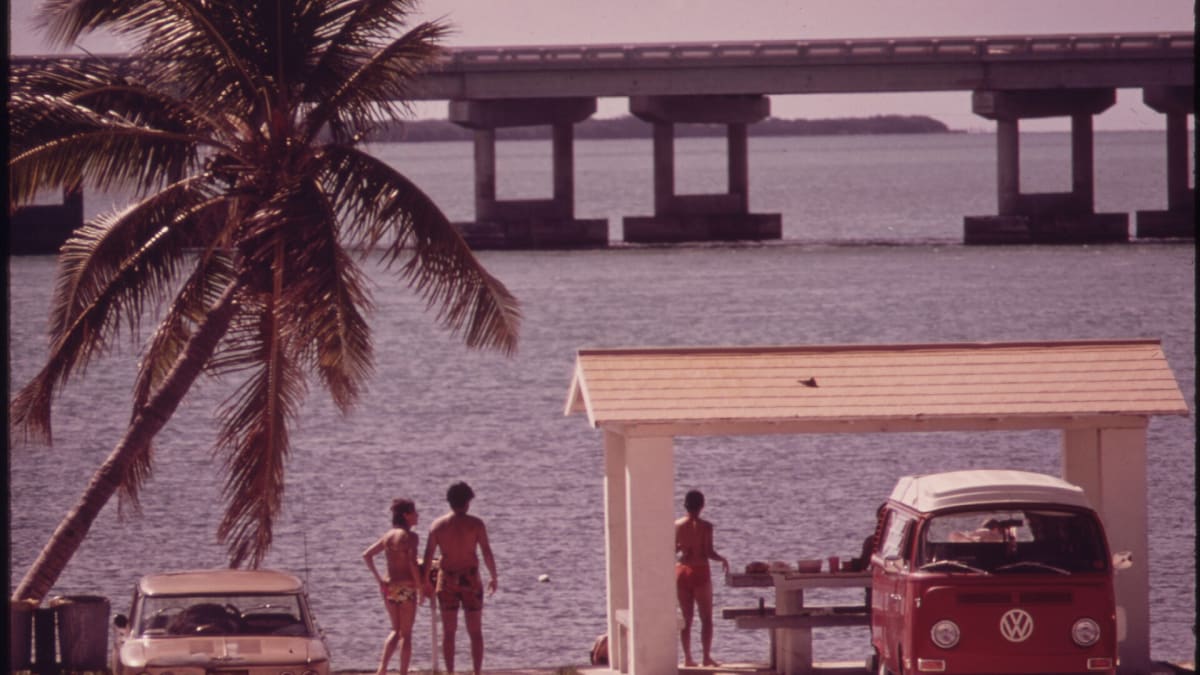
One of the widest, softest beaches in a chain of islands famous for having almost none, framed by the arch of a railroad bridge that once carried trains across the sea.
Bahia Honda is the beach the rest of the Florida Keys does not really have. Most of the island chain is fringed with mangrove and hard limestone rather than sand, so travelers who picture the Keys as long white beaches are often surprised. Bahia Honda, whose name comes from the Spanish for deep bay, is the great exception, with wide banks of soft sand and shallow, glass-clear water that has landed it on lists of the best beaches in the country.
The park sits in the shadow of an old marvel. The graceful concrete arch of the Bahia Honda Rail Bridge, part of Henry Flagler's Overseas Railroad that once ran all the way to Key West, still stands beside the modern highway. From an overlook near the top you can see the Atlantic on one side and the Gulf of Mexico on the other, the two bodies of water almost close enough to touch.
What Travelers Love
- Sandbanks Beach and Loggerhead Beach, two of the broadest natural sand beaches anywhere in the Florida Keys
- The view from the old bridge overlook, with turquoise water on both sides
- Snorkeling straight off the beach over grass flats and small patches of coral
- Warm, shallow, clear water that stays swimmable much of the year
Worth Knowing
- The park fills up fast on warm weekends and holidays, so arrive early or you may find it at capacity
- Shade is limited, so bring sun protection, a hat, and plenty of water
- The old Bahia Honda Rail Bridge is closed to walking on for safety, but there is a marked overlook and it is a favorite photo spot
- Sea grass and shifting sand mean water shoes are handy, and afternoon flows can bring stronger currents in the channels
Learn about Bahia Honda State Park
The railroad that crossed the sea
The bridge that defines Bahia Honda was built as part of one of the boldest engineering feats of its era, Henry Flagler's Overseas Railroad. Beginning in 1905, Flagler pushed his Florida East Coast Railway out across open water, island by island, all the way to Key West, a project so ambitious that people called it Flagler's Folly. Crews poured concrete piers into deep channels and open ocean, working through heat, mosquitoes, and hurricanes. The line was completed in 1912, and an aging Flagler rode the first train into Key West to a hero's welcome.
The Bahia Honda channel was the hardest crossing of all, its water too deep for the usual piers, so engineers built a tall steel truss span here that looks different from the other bridges in the chain. The railroad ran for just over two decades. The catastrophic Labor Day Hurricane of 1935, one of the strongest ever to strike the United States, tore up long sections of track and ended the line for good. The state bought the corridor and rebuilt it as a highway, and for years cars drove on a narrow deck bolted to the top of the old railroad bridge before the modern road was built alongside it.
The beaches and the water
What makes Bahia Honda special is simply the sand. The park has several natural beaches, with Sandbanks and Loggerhead the best known, and unlike the rocky shorelines up and down the Keys, these are genuine stretches of soft sand shelving into warm, shallow water. The color of the sea here, layered bands of pale green and deep turquoise, comes from the mix of white sandy bottom, sea grass beds, and deeper channels.
The snorkeling is gentle and rewarding. Just off the beach, grass flats and scattered coral heads shelter small fish, conch, sea stars, and rays gliding over the sand. Farther out lies Looe Key, a protected coral reef reachable by boat tours that leave from the area, but even wading swimmers can find plenty to watch. Because the park sits where the Atlantic and Gulf meet, tides move water through the channels briskly, so it pays to notice the current before swimming out far.
Wildlife on land and in the shallows
The tidal flats and mangroves make Bahia Honda a fine place to watch wildlife. Wading birds stalk the shallows, ospreys nest on the old bridge and channel markers, and brown pelicans dive just offshore. Herons, egrets, and roseate spoonbills work the mudflats, and in spring and fall migrating songbirds and shorebirds pass through, since the Keys are an important stopover on the flyway.
In the water, this is prime habitat for sea turtles, and Loggerhead Beach takes its name from the loggerhead turtles that nest on Keys beaches in summer. Nurse sharks, tarpon, barracuda, and squadrons of rays cruise the flats, and the park protects rare tropical plants found almost nowhere else in the country, including the silver palm and the spiny thatch palm that grow in its hammocks.
Season by season in the Lower Keys
Winter and early spring are the classic Keys season, with warm dry days, lighter humidity, and cooler water that is still comfortable to swim. These are the busiest months, when snowbirds and beachgoers fill the park, so an early arrival is wise on weekends and around the holidays.
Late spring and early summer bring warm, calm, clear water at its best for snorkeling, along with rising heat and the start of turtle nesting season. Summer and early fall are hot, humid, and the heart of hurricane season, so travelers watch the forecast, though many warm days pass with nothing but afternoon thunderstorms that clear quickly and leave the light beautiful over the water.
Closest Boutels
The closest Boutel™ stays, so you can turn this stop into an overnight. Each is a place we chose through independent editorial review, never a paid placement.
Details
Big Pine Key, FL
Frequently asked questions
What is Bahia Honda State Park?
Bahia Honda State Park, in the Lower Florida Keys near Marathon, is a beloved park famous for having some of the most beautiful beaches in the Keys, a rare stretch of natural sandy shoreline along the turquoise waters. The park offers gorgeous beaches for swimming, snorkeling, and sunbathing, warm clear waters, a historic old railroad bridge from Henry Flagler's overseas railway, nature trails, camping, and kayaking. Its stunning beaches and scenery make it one of the most popular parks in the Keys. With its beautiful beaches, clear waters, and historic bridge, Bahia Honda State Park offers a spectacular destination in Florida.
What can you do at Bahia Honda State Park?
You can swim, snorkel, and sunbathe on the beautiful sandy beaches, wade in the warm turquoise waters, kayak, hike the nature trails, camp, fish, see the historic old Flagler railroad bridge, and enjoy the stunning Keys scenery. The gorgeous beaches, the clear waters, and the snorkeling are highlights, offering a rare taste of natural sandy shoreline in the Keys. It is a favorite for beach lovers and families. With its beaches, swimming, snorkeling, and camping, Bahia Honda State Park offers a rewarding experience in the Florida Keys.
What safety tips apply at Bahia Honda State Park?
When swimming and snorkeling, be aware of currents, watch children closely, and note the beaches may not have lifeguards, so swim with caution. Use reef-safe sunscreen, bring plenty of water and sun protection, as the Keys sun is intense with little shade, and wear water shoes for rocky areas. Watch for marine life and boat traffic in the water. Being cautious in the water, protecting against the strong sun, and supervising children ensure a safe visit to Bahia Honda State Park in the Florida Keys.
When is the best time to visit Bahia Honda State Park?
The Florida Keys are pleasant year-round, with winter and spring offering the most comfortable weather, calm clear waters, and ideal beach and snorkeling conditions, drawing many visitors, while summer is hot, humid, and prone to afternoon storms though the water is warm. The park is very popular and can reach capacity, so arriving early is wise. Bring sun protection. For the best combination of comfortable weather and beautiful beach conditions, aim for winter through spring at Bahia Honda State Park in the Florida Keys.
What is near Bahia Honda State Park?
Bahia Honda State Park is in the Lower Florida Keys near Marathon, within reach of Marathon with the Turtle Hospital and Crane Point Museum, Islamorada with Robbie's and the History of Diving Museum, and the route toward Key West. That makes Bahia Honda State Park a spectacular stop to combine with the Turtle Hospital, Marathon, and the other attractions of the Florida Keys on a visit to the state.
Outside the Park
The Turtle Hospital
11 miles away
This is a real working hospital for sea turtles, and kids get to meet the patients.

Crane Point Museum and Nature Center
14 miles away
People drive straight past this on the highway through Marathon without knowing 63 acres of wild tropical forest sit right there.

Anne's Beach
36 miles away
A rare free, sandy beach in the Florida Keys, on the south end of Upper Matecumbe Key.

Everglades National Park
55 miles away
A slow-moving river of grass, the only place where alligators and crocodiles live side by side.