
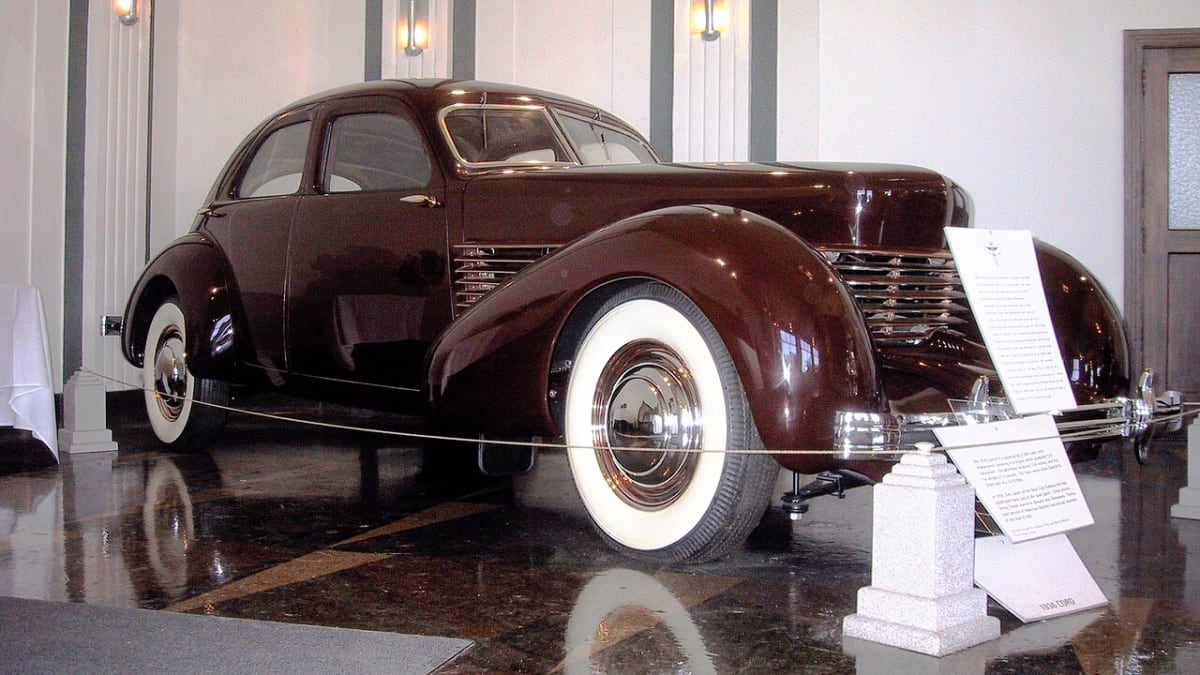
Auburn Cord Duesenberg Automobile Museum
400 E 7th St, Auburn, IN
Auburn, IN
Rows of gleaming Duesenbergs and Cords fill the very Art Deco showroom where they were once sold, a temple to the golden age of the American automobile.
The Auburn Cord Duesenberg Automobile Museum tells the story of the golden age of the American car through the machines of one small Indiana town. From the 1920s into the 1930s, the Auburn Automobile Company built the Auburn, the Cord, and the extraordinary Duesenberg, cars so powerful, beautiful, and expensive that they became symbols of Jazz Age glamour. The Duesenberg in particular was a favorite of movie stars and tycoons, and the phrase it inspired, that something is a doozy, still lingers in the language.
The museum is housed in the company's own former headquarters, a magnificent Art Deco showroom built in 1930. Its terrazzo floors, chandeliers, and soaring central hall were designed to sell the finest cars in America, and today they display them instead. Walking in feels like stepping back into the moment when this quiet town stood at the glamorous edge of the automobile world.
What Travelers Love
- The soaring Art Deco showroom, a landmark building as striking as the cars inside it
- Standing beside a Duesenberg, one of the most luxurious American cars ever built
- The sweeping curves of the Cord 810 and 812, decades ahead of their time
- The sense of local pride in a small town that once built world-class machines
Worth Knowing
- The building itself is a National Historic Landmark, so allow time to admire the architecture along with the cars
- A companion truck and military-vehicle museum sits nearby if you want to make a day of it
- The town's big classic-car auction fills Auburn each Labor Day weekend, so plan around it
- Photography is welcome, but check current rules at the desk before setting up equipment
Learn about Auburn Cord Duesenberg Automobile Museum
The town that built doozies
Auburn grew into an unlikely center of the luxury car trade in the early twentieth century, one of dozens of Indiana towns that took part in the state's brief but brilliant run as an automaking powerhouse. The Auburn Automobile Company reached its height under the businessman E. L. Cord, who assembled a group of brands, added the front-wheel-drive Cord and acquired the Duesenberg name, and aimed squarely at buyers who wanted the fastest, finest, and most striking cars money could buy.
The Duesenberg Model J, introduced in 1928, was the crown of that effort, a hand-built chassis fitted with custom coachwork and an engine of remarkable power for its day. Owning one was a statement of wealth and taste, and the roster of buyers read like a who's who of the era. The Great Depression eventually undid the company, as it did so many luxury makers, and by the late 1930s production had ended, but the cars had already earned their place in legend.
The Art Deco showroom
The museum building is a masterpiece in its own right. Completed in 1930 as the company's administration building and showroom, it is a jewel of Art Deco design, from its stepped facade to its dramatic central hall with terrazzo floors, elegant lighting, and clean geometric lines. It was built to make the act of buying a car feel like an occasion, and it still does.
That the cars are displayed in the very place they were once sold gives the museum a rare authenticity. The building has been recognized as a National Historic Landmark, and its architecture is as much a reason to visit as the automobiles. Standing in the hall, surrounded by gleaming coachwork under the Deco lights, you feel the confidence of an age that believed the machine could be a work of art.
The cars themselves
The collection centers on the local marques, the Auburn, the Cord, and the Duesenberg, along with other classics of the era. The Auburn boattail speedsters are all rakish curves and long hoods. The Cord 810 and 812, with their hidden headlights, coffin-nose front, and front-wheel drive, looked like nothing else on the road and are still considered among the most beautiful American cars ever designed. And the Duesenbergs are simply imposing, long and low and built to a standard few makers ever matched.
Beyond the headline cars, the museum traces the broader story of the American automobile and the design and engineering ideas that flowed through it. Displays show how these machines were built, marketed, and dreamed about, and the collection changes over time as vehicles rotate in and out. For anyone who loves cars, or simply loves great design, it rewards a slow, careful look.
Auburn and the auto country around it
Auburn wears its automotive heritage proudly. Just a short walk or drive away sits a companion museum devoted to trucks and military vehicles, and the town's history as a manufacturing center is felt in its brick downtown and its civic pride. Each Labor Day weekend, one of the country's best-known classic-car auctions fills the town, drawing collectors and enthusiasts from across the world.
The setting is small-town northeastern Indiana, gently rolling farm country a short drive from the larger city of Fort Wayne. It makes for an easy, rewarding stop, a place where a modest town's outsized chapter in American history is preserved with real care. Pair the museum with the surrounding sights and it becomes a full and memorable day.
Closest Boutels
The closest Boutel™ stays, so you can turn this stop into an overnight. Each is a place we chose through independent editorial review, never a paid placement.
Details
Auburn, IN
Frequently asked questions
What is the Auburn Cord Duesenberg Automobile Museum?
The Auburn Cord Duesenberg Automobile Museum, in Auburn, Indiana, is a magnificent museum celebrating the legendary luxury and classic automobiles built in Auburn during the golden age of the American automobile, housed in a stunning Art Deco former factory showroom. The museum displays gorgeous Auburn, Cord, and Duesenberg cars, some of the most beautiful, elegant, and prestigious automobiles ever made, along with other classic cars, all in the beautifully preserved Art Deco building that was once the company's showroom. Its dazzling classic cars and remarkable setting make it a fascinating destination. A superb and beautiful automotive museum, it delights visitors. With its classic cars, the museum offers a compelling destination in Indiana.
What can you see at the Auburn Cord Duesenberg Automobile Museum?
You can see gorgeous Auburn, Cord, and Duesenberg automobiles, among the most beautiful and prestigious cars ever built, along with other classic vehicles, all displayed in the stunning Art Deco former factory showroom. The dazzling classic luxury cars, the famous Duesenbergs, and the beautiful Art Deco setting are the draws, making it a fascinating and elegant visit. The magnificent cars and the Art Deco building are highlights. With its collection, the Auburn Cord Duesenberg Automobile Museum offers a rewarding visit in Auburn, Indiana.
Why are Auburn, Cord, and Duesenberg cars famous?
Auburn, Cord, and Duesenberg cars are famous as some of the most beautiful, elegant, innovative, and prestigious automobiles ever built, produced in Auburn, Indiana, during the golden age of the American automobile in the early twentieth century. Duesenbergs in particular were among the finest and most luxurious cars in the world, prized by the wealthy and celebrated. These legendary marques made Auburn a center of automotive excellence. Understanding this heritage enriches a visit to the Auburn Cord Duesenberg Automobile Museum in Indiana.
When is the best time to visit the Auburn Cord Duesenberg Automobile Museum?
As an indoor museum, the Auburn Cord Duesenberg Automobile Museum is enjoyable year-round in any weather, making it a great stop in any season, while the annual classic-car festival in the area adds special appeal at its time. Because hours and events can vary, checking the current schedule before you go is wise. Because it is indoors, the museum makes a rewarding stop any time of year in Auburn, Indiana.
What is near the Auburn Cord Duesenberg Automobile Museum?
The Auburn Cord Duesenberg Automobile Museum is in Auburn, Indiana, within reach of other automotive attractions in Auburn, Fort Wayne to the south with Science Central and the Children's Zoo, the Elkhart area, and the other attractions of northern Indiana. That makes the Auburn Cord Duesenberg Automobile Museum a compelling stop to combine with the attractions of the Fort Wayne and Elkhart area on a visit to Indiana.
Nearby
Fort Wayne Childrens Zoo
19 miles away
This is one of the best small zoos in the country, and it is built for kids.

Science Central
20 miles away
Science Central turns a former power plant into a hands-on playground, and the building itself is part of the fun.
Fort Waynes Famous Coney Island Wiener Stand
20 miles away
For a genuine bite of Fort Wayne history, stop at the Famous Coney Island Wiener Stand at 131 W Main St, serving chili-topped coney dogs from the same downtown counter since 1914.