

Ash Cave
25780 Liberty Hill Rd, South Bloomingville, OH
South Bloomingville, OH
A single sweeping arc of sandstone the size of a stadium, with a ribbon of water spilling off the rim into a cool green hollow below.
Ash Cave is not a cave in the underground sense but a colossal recessed rock shelter, a single curved overhang of sandstone that arcs back into the hillside like a great open-air amphitheater. It is the largest recess cave in Ohio, wide enough that voices echo under its rim, and after rain a slender waterfall drops from the lip into a pool on the gorge floor.
Reaching it is unusually easy for a natural wonder. A short, level, paved trail follows a cool gorge lined with hemlock and towering trees straight to the base of the shelter, which makes Ash Cave one of the most accessible showpieces in the Hocking Hills. The scale only registers once you are standing inside, looking up at the rim far overhead.
What Travelers Love
- A short, mostly level gorge trail that suits nearly everyone, including strollers and wheelchairs
- Standing inside an enormous curved rock recess that dwarfs the people beneath it
- The thin ribbon waterfall that pours off the rim after rain or snowmelt
- Cool, green, hemlock-shaded air even on a hot summer day
Worth Knowing
- The lower gorge trail to the shelter is paved and accessible; a separate rim trail loops above
- The waterfall is seasonal and runs strongest in spring and after rain; in dry spells it thins to a trickle
- Rock surfaces stay damp and slick, so wear grippy shoes and stay behind railings and off ledges
- It is one of the busiest Hocking Hills sites, so early mornings and weekdays are calmer
Learn about Ash Cave
How the rock shelter got its name
Ash Cave takes its name from enormous piles of ash that early settlers found heaped beneath the overhang in the early nineteenth century. The sheltered, dry floor had clearly been used for fires over a very long span of time, and the accumulated ash was deep enough to be remarked upon and, unfortunately, largely carried off before anyone thought to study it.
The Hocking Hills were part of the ancestral homeland of the Shawnee, Lenape (Delaware), and Wyandot peoples, and earlier ancient cultures used these deep rock shelters as well. The dry recess would have offered shelter and a place for fires out of the weather. Those tribes were forcibly removed from Ohio in the nineteenth century, and their descendant nations continue today, largely in Oklahoma.
How the sandstone was carved
The rock here is Blackhand sandstone, laid down as sand in an ancient sea and river system hundreds of millions of years ago, then compressed into stone. The sandstone is not uniform: harder, tightly cemented layers sit over softer, loosely bound ones, and that difference is the key to the whole landscape.
Water seeping through and running over the rock wears away the soft middle layers faster than the hard cap above, undercutting the cliff and leaving a great curved recess with a resistant roof overhanging a hollowed-out floor. Every rock shelter and gorge in the Hocking Hills is a variation on that same slow carving, and Ash Cave is the grandest example of it.
Hemlocks, the gorge, and its wildlife
The gorge holds a cool, moist microclimate that feels more like the far north than southern Ohio. Eastern hemlocks, Canada yellow birch, and mosses and ferns thrive in the shade and damp, relics of the cooler climate that followed the last ice age and that survive here because the deep, shaded gorges stay cold and humid.
That green stillness draws wildlife. Warblers and other songbirds move through the canopy, pileated woodpeckers drum on the tall trees, and salamanders hide in the damp leaf litter along the stream. White-tailed deer, wild turkeys, and the occasional fox move through the surrounding forest, most of it out of sight of the busy trail.
Season by season in the Hocking Hills
Spring is when the waterfall runs its fullest, fed by snowmelt and rain, and the gorge greens up with fresh ferns and wildflowers. It is many visitors' favorite time, with the trade-off of muddy footing and cool, damp air.
Summer is warm and busy, and the shaded gorge stays noticeably cooler than the open country above, a genuine relief on a hot day. Fall brings crowds of leaf-peepers to the hardwood hills for the color, and winter turns the scene quiet and dramatic, with the seasonal waterfall sometimes freezing into columns of ice and the shelter dusted with snow.
Closest Boutels
The closest Boutel™ stays, so you can turn this stop into an overnight. Each is a place we chose through independent editorial review, never a paid placement.
The Roscoe Boutique Motel
Honorable Mention421 S Whitewoman St, Coshocton, OH
70 miles away|Learn More ›
Details
South Bloomingville, OH
Frequently asked questions
What is Ash Cave?
Ash Cave, in Hocking Hills State Park in southeastern Ohio, is the largest recess cave in the state, a massive and breathtaking horseshoe-shaped sandstone shelter with a delicate waterfall spilling over its rim. This enormous recess cave, a great curved overhang of sandstone stretching hundreds of feet wide and rising high overhead, shelters a broad, sandy floor, while a slender waterfall cascades over the edge into a pool below, especially lovely after rain or snowmelt. Reached by an easy, accessible trail through a lovely gorge, it is one of the most impressive and beloved features of Hocking Hills. A magnificent and accessible natural wonder, it awes visitors. With its great recess cave, Ash Cave offers a spectacular destination in Ohio.
What can you do at Ash Cave?
You can walk the easy, accessible trail through a lovely gorge to the enormous recess cave, marvel at the huge sandstone overhang, see the delicate waterfall spilling over the rim, and take in the beautiful gorge scenery. The massive recess cave, the waterfall, the accessible trail, and the gorge scenery are the draws, making it a wonderful and easy-to-reach natural destination. The immense sandstone shelter and the waterfall are highlights. With its cave and waterfall, Ash Cave offers a rewarding experience in Ohio.
Is Ash Cave safe, and what should I know?
Ash Cave is reached by an easy, accessible lower trail, but the area has cliffs above and slippery rocks, so staying on the designated trails, keeping back from cliff edges above and any barriers, not climbing on the rocks, and watching your footing on wet surfaces are important for safety. Supervising children closely and heeding all signs matter. The lower trail's accessibility makes the cave easy to enjoy safely. Staying on the trail and back from the edges ensures a safe visit to Ash Cave in Ohio.
When is the best time to visit Ash Cave?
Ash Cave is beautiful year-round, with the waterfall fullest and most dramatic in spring and after rain or snowmelt, the gorge lush in summer, fall lovely with foliage, and winter offering striking ice, though the popular site can be crowded on nice weekends, so arriving early helps. Because conditions and crowds vary, checking current information before you go is wise. For the fullest waterfall aim for spring, or enjoy the scenery in any season, at Ash Cave in Ohio.
What is near Ash Cave?
Ash Cave is in Hocking Hills State Park in southeastern Ohio, within reach of the park's other famous features like Old Man's Cave and Cedar Falls, the town of Logan, and the routes across southeastern Ohio. That makes Ash Cave a spectacular stop to combine with the rest of Hocking Hills State Park and the other attractions of southeastern Ohio on a visit to the state.
Nearby

Hocking Hills State Park
2.5 miles away
Hocking Hills is where flat Ohio cracks open into gorges, and Old Man Cave is its heart.
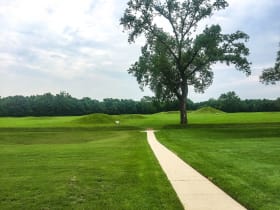
Hopewell Culture National Historical Park
24 miles away
Two thousand years before Ohio had a name, people here built earthworks of astonishing scale and geometric precision, and Chillicothe is the best place to stand among them.
The Ridges and Kennedy Museum of Art
24 miles away
Looming on the ridge above Athens is one of the most atmospheric buildings in Ohio, and most road-trippers drive right past it.