
Anza-Borrego Desert
Borrego Springs, CA
Borrego Springs, CA
Twisting slot canyons, shaded palm oases, and eroded badlands hiding fossils of camels and mammoths, all within reach of a small desert town.
The stretch of Anza-Borrego closest to Borrego Springs holds the desert's greatest hits in a surprisingly small radius. Within a short drive you can walk into a shaded oasis of native California fan palms, thread a slot canyon barely wider than your shoulders, and stand at the rim of badlands carved into ridges and gullies by flash floods and time.
It is a landscape in constant motion. Seismic action, erosion, and sudden desert downpours are always reshaping the canyons and cliffs, and every so often that same weather triggers something spectacular: after a wet winter, the desert floor can explode into a wildflower super-bloom that draws people from across California.
What Travelers Love
- Hidden fan-palm oases tucked into rocky canyons, fed by underground springs
- Wind-and-water-carved slot canyons narrow enough to touch both walls
- Eroded badlands that reveal fossils of Ice Age animals
- A wildflower super-bloom in a rare wet spring
Worth Knowing
- Summer heat is severe; plan for October through April and carry ample water
- Slot canyons can flash flood, so never enter one when rain is in the forecast anywhere upstream
- Some oases and canyons sit at the end of soft sandy roads better suited to four-wheel drive
- Wildflower blooms are unpredictable and short; check current reports rather than counting on them
Learn about Anza-Borrego Desert
Oases of the only native California palm
Scattered through the canyons are pockets of green that feel almost impossible in this dry country: oases of the California fan palm, the only palm native to the state. They cluster wherever underground water reaches the surface along a fault or a spring, their skirts of dead fronds giving them a shaggy, ancient look.
These oases have always been lifelines. The Cahuilla, Kumeyaay, and Cupeno peoples relied on the desert's rare water sources for survival and trade long before Europeans arrived, and their descendants remain part of this region today. Reaching a palm oasis on foot, after miles of open rock and sand, makes the shade and the sound of water feel like a genuine reward.
Slot canyons and shifting badlands
Flash floods that tear down from the mountains have sculpted narrow slot canyons into the soft desert rock, some pinching down to passages barely wide enough to squeeze through, their walls smoothed and fluted by water and grit. Walking one is like moving through a natural corridor with the sky reduced to a ribbon overhead.
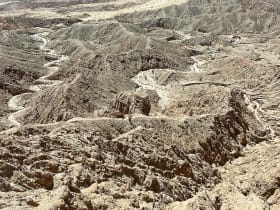
The badlands nearby tell a longer story. Their bare, eroded layers record millions of years of sediment, and as they wear away they surface the bones of a wetter past, fossils of mammoths, camels, and saber-toothed cats that once lived here when this was a lusher landscape. The ground is genuinely in flux, so trails and washes can change from one season to the next.
Wildlife and the super-bloom
The desert here is well populated if you slow down to look. Peninsular bighorn sheep browse the canyon slopes, and roadrunners, kit foxes, black-tailed jackrabbits, and a wide cast of lizards and snakes make their living among the cactus and creosote. Ocotillo, cholla, and barrel cactus dot the flats.
Every few years, when winter rain arrives at the right times and in the right amounts, the desert answers with a super-bloom: sand verbena, desert lilies, and dune primrose carpeting the flats while the ocotillo tips flame red. It is brief and unreliable, which is exactly why a good one feels like witnessing something rare.
How to explore it safely
This is a place to plan around the heat and the water. From late spring through early fall the temperatures are dangerous, so most visits fall between October and April, and carrying plenty of water is non-negotiable in any season. Cell service is spotty, so download maps and let someone know your route.
Respect the flash-flood risk in the slots, stay out of them when storms threaten upstream, and know that many of the finest oases and canyons lie at the end of soft sandy roads where a high-clearance or four-wheel-drive vehicle makes all the difference. Take it seriously and the desert opens up.
Closest Boutels
The closest Boutel™ stays, so you can turn this stop into an overnight. Each is a place we chose through independent editorial review, never a paid placement.
Details
Borrego Springs, CA
Frequently asked questions
What is the Anza-Borrego Desert?
The Anza-Borrego Desert is a vast and beautiful stretch of the Colorado Desert in San Diego County, California, largely protected within Anza-Borrego Desert State Park, the largest state park in California. This expansive desert wilderness is renowned for its dramatic badlands, hidden palm oases, slot canyons, ancient Native American rock art, diverse wildlife including the desert bighorn sheep, and, in years with good rains, spectacular spring wildflower superblooms. With its remote beauty, exceptionally dark night skies, and the whimsical giant sculptures near Borrego Springs, the Anza-Borrego Desert offers an unforgettable and uncrowded desert adventure.
What makes the Anza-Borrego Desert special?
The Anza-Borrego Desert is special for its remarkable diversity and beauty, combining dramatic eroded badlands, surprising palm oases fed by springs, colorful slot canyons, ancient rock art, and rich wildlife within one vast, protected wilderness. It is famous for its spring wildflower superblooms in wet years, its exceptionally dark skies ideal for stargazing, and the playful giant metal sculptures scattered near Borrego Springs. This blend of geological wonder, natural beauty, wildlife, cultural history, and artistic whimsy, all in a remote and uncrowded setting, gives the Anza-Borrego Desert its distinctive and captivating character.
What safety precautions should I take in the Anza-Borrego Desert?
The desert heat can be extreme and life-threatening, especially in summer, so carry far more water than you expect to need, wear sun protection, avoid strenuous activity in the heat, and visit in the cooler months. This remote desert has limited services and cell coverage, so bring supplies, tell someone your plans, and check road conditions, since many areas require high-clearance or four-wheel-drive vehicles. Beware of flash floods in canyons during storms. Thorough preparation, ample water, and caution are essential for safely exploring this vast and remote desert.
When is the best time to visit the Anza-Borrego Desert?
The cooler months from late fall through early spring are by far the best and safest time to visit, offering comfortable temperatures and, in spring, the famous wildflower blooms in wet years, while summer brings dangerous, extreme heat that makes exploration hazardous. Winter and spring are ideal for hiking the badlands and oases and for stargazing. For the wildflowers, aim for spring, keeping in mind the timing depends on rainfall. For safe and comfortable desert exploration, plan a visit during the cool season and avoid the brutal summer heat.
What is near the Anza-Borrego Desert?
The Anza-Borrego Desert surrounds the town of Borrego Springs in San Diego County, known for its dark skies and giant metal sculptures, within reach of the Coachella Valley and Palm Springs to the north and San Diego and its coast to the west. That makes the Anza-Borrego Desert a remote and spectacular destination to combine with Borrego Springs, the Palm Springs resort area, and the wider deserts and coast of Southern California on a memorable desert getaway.
Nearby
Borrego Palm Canyon Trail
1.1 miles away
The Borrego Palm Canyon Trail begins at the Borrego Palm Canyon Campground, less than a mile from the center of Borrego Springs.
Galleta Meadows Steel Sculptures
1.9 miles away
The Galleta Meadows estate on the northern edge of Borrego Springs holds the largest outdoor sculpture collection in the California desert, all placed by the property's late owner Dennis Avery beginni...
Anza-Borrego
2.5 miles away
Borrego Springs is an isolated desert town surrounded on three sides by Anza-Borrego Desert State Park and on the fourth by Santa Rosa and San Jacinto Mountains National Monument.
Fonts Point
11 miles away
A cliff-edge overlook of the eroded Borrego Badlands inside Anza-Borrego Desert State Park, often called California's Grand Canyon.
Anza-Borrego Desert State Park
12 miles away
Anza-Borrego Desert State Park covers 600,000 acres in San Diego County and is the largest state park in the contiguous United States.

Joshua Tree National Park
61 miles away
Where the Mojave and Colorado deserts meet, dotted with twisting Joshua trees and giant granite boulders.