
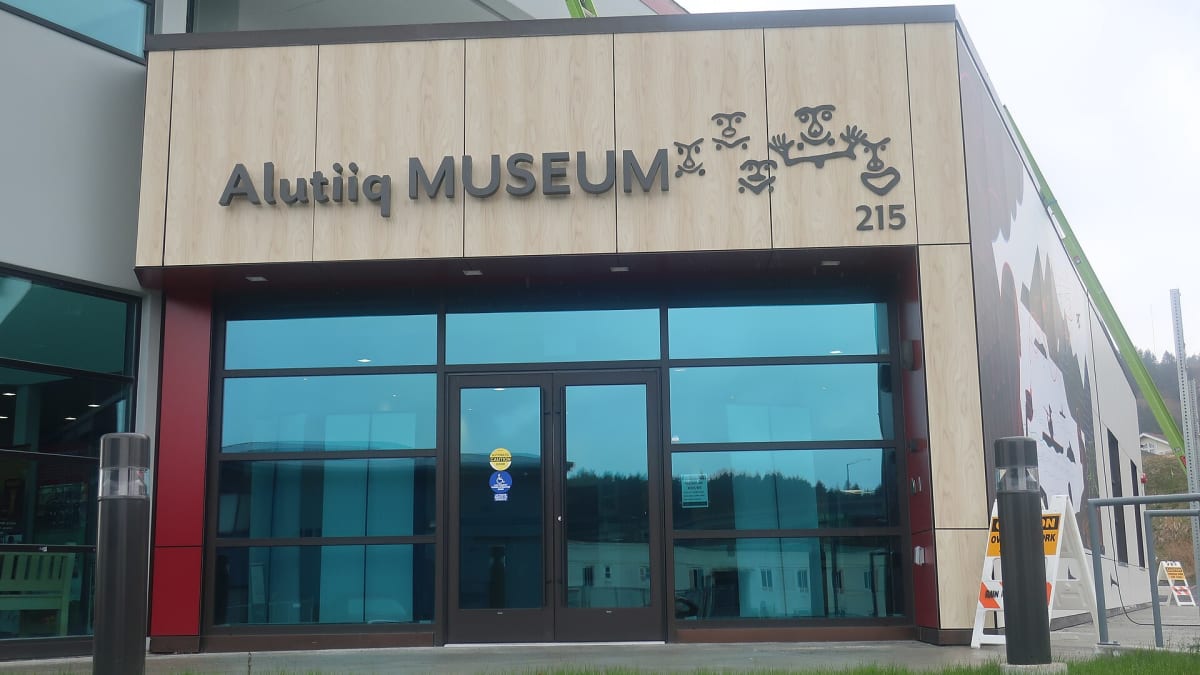
Alutiiq Museum
215 Mission Rd
Kodiak, AK
A museum owned and run by the Alutiiq people themselves, keeping a 7,500-year-old culture alive on its home island.
The Alutiiq Museum tells the story of the Alutiiq, also known as Sugpiaq, the Native people of Kodiak Island and the surrounding Gulf of Alaska coast, whose ancestors have lived here for roughly 7,500 years. What sets the museum apart is that it belongs to the Alutiiq people, governed by a group of Alaska Native organizations, so the culture is presented from the inside rather than by outsiders looking in.
Inside are masks, hunting tools, basketry, carvings, and archaeological finds that trace daily life across millennia, from sea-mammal hunting in skin kayaks to the arrival of Russian traders and the disruptions that followed. But the museum is not only about the past. It is a working engine of cultural revival, teaching the Alutiiq language, reviving old art forms, and bringing home ancestral belongings from distant collections.
What Travelers Love
- Masks, tools, and artwork drawn from thousands of years of Alutiiq life
- A museum shaped and governed by Alutiiq people, telling their own story
- The active work of reviving the Alutiiq language and traditional arts
- A gift shop of authentic, artist-made Alutiiq work
Worth Knowing
- The museum is compact, so an hour or two is enough for a focused visit
- It doubles as a research repository, so exhibits often reflect ongoing archaeology and community projects
- Kodiak weather is wet and cool, making the museum a fine indoor stop between outings
- Ask about current classes, demonstrations, or events that welcome visitors
Learn about Alutiiq Museum
Who the Alutiiq are
The Alutiiq, or Sugpiaq, are a maritime people of the Gulf of Alaska, at home on Kodiak Island, the Alaska Peninsula, and the Kenai and Prince William Sound coasts. For thousands of years they lived by hunting seals, sea lions, whales, and sea otters from skin-covered kayaks, fishing the salmon runs, and gathering from a rich shoreline.
Their world changed dramatically after Russian fur traders arrived in the late 1700s, drawn by the sea otter pelts that Alutiiq hunters were forced to supply. Disease, violence, and forced labor cost many lives, and later waves of change brought new pressures on language and tradition. Through all of it the Alutiiq endured.
Today Alutiiq communities remain across the region, and a determined cultural revival is underway, with the museum at its center. The people, their language, and their arts are living and present, not vanished.
A collection that came home
The museum holds an extensive collection of Alutiiq objects and one of the largest archaeological repositories in Alaska, much of it recovered from village sites and eroding shorelines around the island. Masks are a particular treasure, since Alutiiq carvers made expressive wooden masks for ceremony and dance, many of which were carried off to museums far away in the nineteenth century.
A major thread of the museum's work is repatriation, the return of ancestral human remains and cultural belongings from institutions elsewhere. Bringing those masks and objects back to Kodiak reconnects the community with its own heritage and gives living artists models to study and revive.
Exhibits rotate as new research and projects unfold, so a visit often reflects what the community is working on right now, whether an archaeological dig, an art revival, or a language milestone.
Reviving language and art
The Alutiiq language was pushed to the brink over the twentieth century, but the museum leads an ambitious effort to bring it back, working with the remaining fluent elders to document words, record stories, and teach new speakers. Language classes, apps, and a growing archive are all part of that push.
The museum also nurtures traditional arts that had grown rare, from skin sewing and basketry to carving and beadwork, pairing master artists with new students. The result is a culture actively renewing itself rather than merely being remembered.
Visitors benefit from this energy. The exhibits feel current, the staff are often community members, and the shop sells work by living Alutiiq artists, so a purchase supports the revival directly.
Kodiak, the island around it
Kodiak is Alaska's Emerald Isle, green and mountainous, wrapped in fog and spruce, and famous for the Kodiak brown bear, the largest of its kind. The town is one of the country's busiest fishing ports, with a harbor full of boats and a strong Alutiiq, Russian, and fishing heritage layered together.
The museum pairs naturally with the nearby Baranov Museum in Kodiak's oldest building and with the town's Russian Orthodox church, together telling the island's Alutiiq and Russian-era story. Beyond town, the Kodiak National Wildlife Refuge covers much of the island as bear and salmon country.
Closest Boutels
The closest Boutel™ stays, so you can turn this stop into an overnight. Each is a place we chose through independent editorial review, never a paid placement.
Details
Kodiak, AK
Frequently asked questions
What is the Alutiiq Museum?
The Alutiiq Museum, in Kodiak on Kodiak Island in southern Alaska, is a museum dedicated to the heritage of the Alutiiq, or Sugpiaq, people, the Native people of the Kodiak region who have lived here for thousands of years. Created to preserve and share Alutiiq culture, the museum holds a rich collection of artifacts, art, and archaeological treasures, and offers exhibits, language and cultural programs, and demonstrations that celebrate the living traditions, history, and resilience of the Alutiiq people. It is a place of cultural pride and learning created with and for the community. A meaningful and enriching window into Alutiiq life, it educates and moves visitors. With its living heritage, the Alutiiq Museum offers a compelling destination in Alaska.
Who are the Alutiiq people?
The Alutiiq, also known as Sugpiaq, are the Native people of the Kodiak Island region and parts of southern coastal Alaska, who have lived in this land for thousands of years with a rich culture centered on the sea, salmon, and the resources of the coast. Their heritage includes distinctive art, language, kayaks and hunting traditions, and a history of resilience through the changes brought by contact and colonization. The Alutiiq Museum, created with the community, celebrates and preserves this living culture. Learning about the Alutiiq people enriches a visit to the Alutiiq Museum in Alaska.
What can you see at the Alutiiq Museum?
You can see a rich collection of Alutiiq artifacts, art, and archaeological treasures, explore exhibits on the culture, history, and traditions of the Alutiiq people, and take in language and cultural programs and demonstrations that share their living heritage. The artifacts and art, the cultural and historical exhibits, and the living-culture programs are the draws, offering a respectful and enriching experience. Learning directly about Alutiiq heritage is the heart of a visit. With its collections and programs, the Alutiiq Museum offers a rewarding visit in Kodiak, Alaska.
When is the best time to visit the Alutiiq Museum?
As an indoor museum, the Alutiiq Museum can be enjoyed whenever it is open, with summer offering the mildest weather and fullest visitor season on Kodiak, though the museum welcomes visitors in other seasons too; Kodiak is reached by air or ferry, so travel requires planning. Because hours can vary, checking current information before you go is wise. For the mildest weather and fullest season, aim for summer, and plan your travel, at the Alutiiq Museum in Alaska.
What is near the Alutiiq Museum?
The Alutiiq Museum is in the town of Kodiak on Kodiak Island in southern Alaska, within reach of the Kodiak National Wildlife Refuge Visitor Center, the town's harbor and history, and the vast Kodiak wilderness, all reached by air or ferry. That makes the Alutiiq Museum a compelling stop to combine with the Kodiak National Wildlife Refuge Visitor Center and the other attractions of Kodiak on a visit to Alaska.
Nearby

Kodiak National Wildlife Refuge Visitor Center
0.4 miles away
The Kodiak brown bear is the biggest bear on the planet, and this is where kids can get to know it without leaving town.